
Signal conditioning
The signal amplified next to the sensor, before it crosses the slip ring.
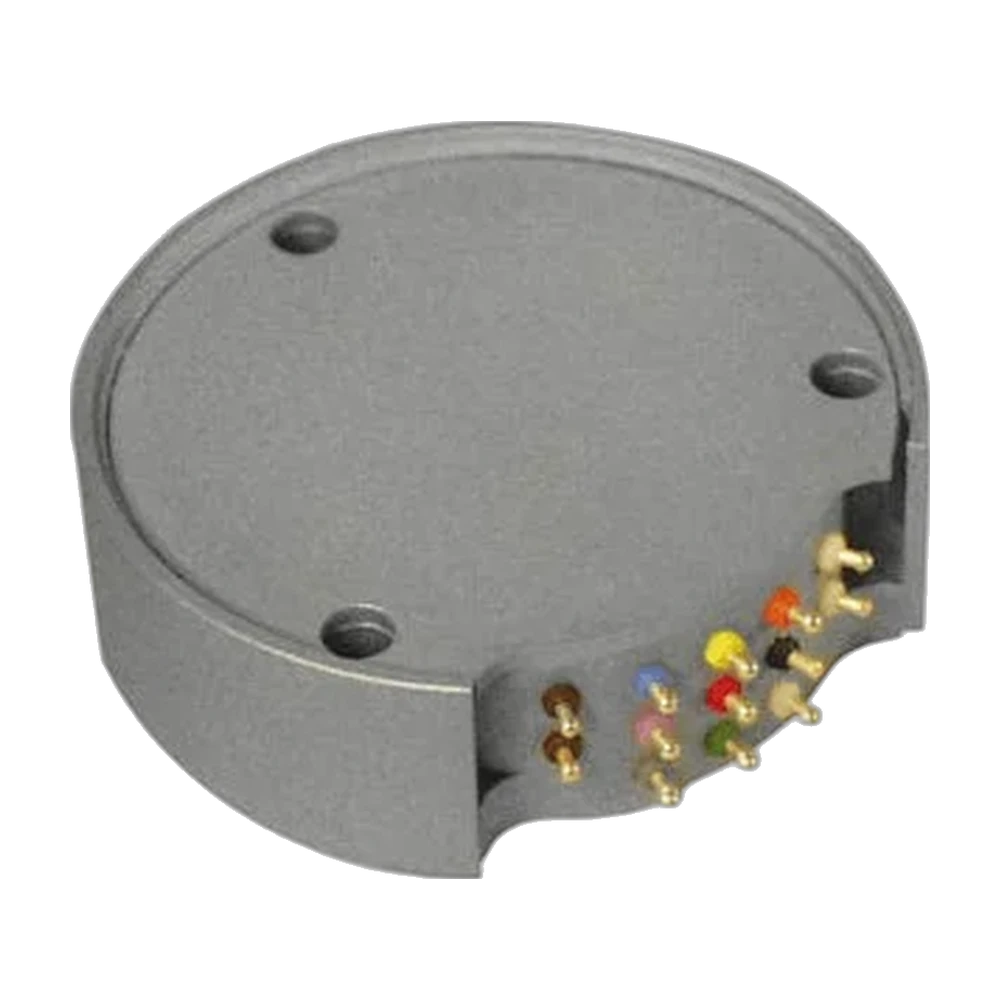
Strain gage and thermocouple amplifiers that mount on the rotating part or on the rotor of an SR slip ring, from 3.9 g. Amplifier boxes for TR3D three-axis load cells, the EC-LV encoder conditioner and the PS-AC control unit for spinning amplifiers complete the family.
- 100 to 2000 V/V
- gain, spinning strain gage amplifiers
- E, J, K, T
- thermocouple types, AMP-TC-M1
- ± 10 V · CAN FD
- outputs
- 3.9 g
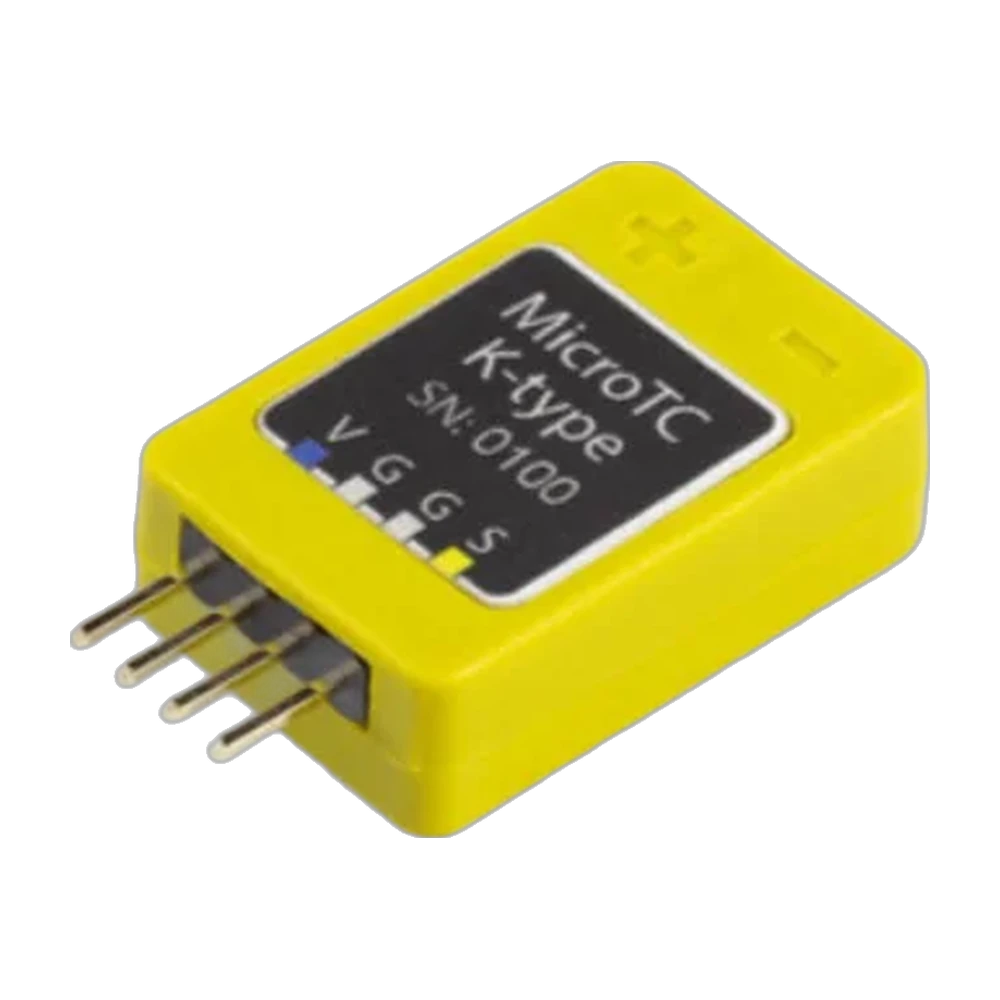
- lightest unit, MicroTC
Amplify before the contact, not after.
A strain gage or a thermocouple gives millivolts. The amplifier sits on the rotating part, next to the sensor, so what crosses the slip ring is a high-level voltage (± 10 V from the strain gage amplifiers, 0 to 10 V from the thermocouple amplifiers) or a CAN frame.
Placed close to the sensor, the amplifier reduces the errors that come from long lead wires, variations in connector resistance and electromagnetic interference.
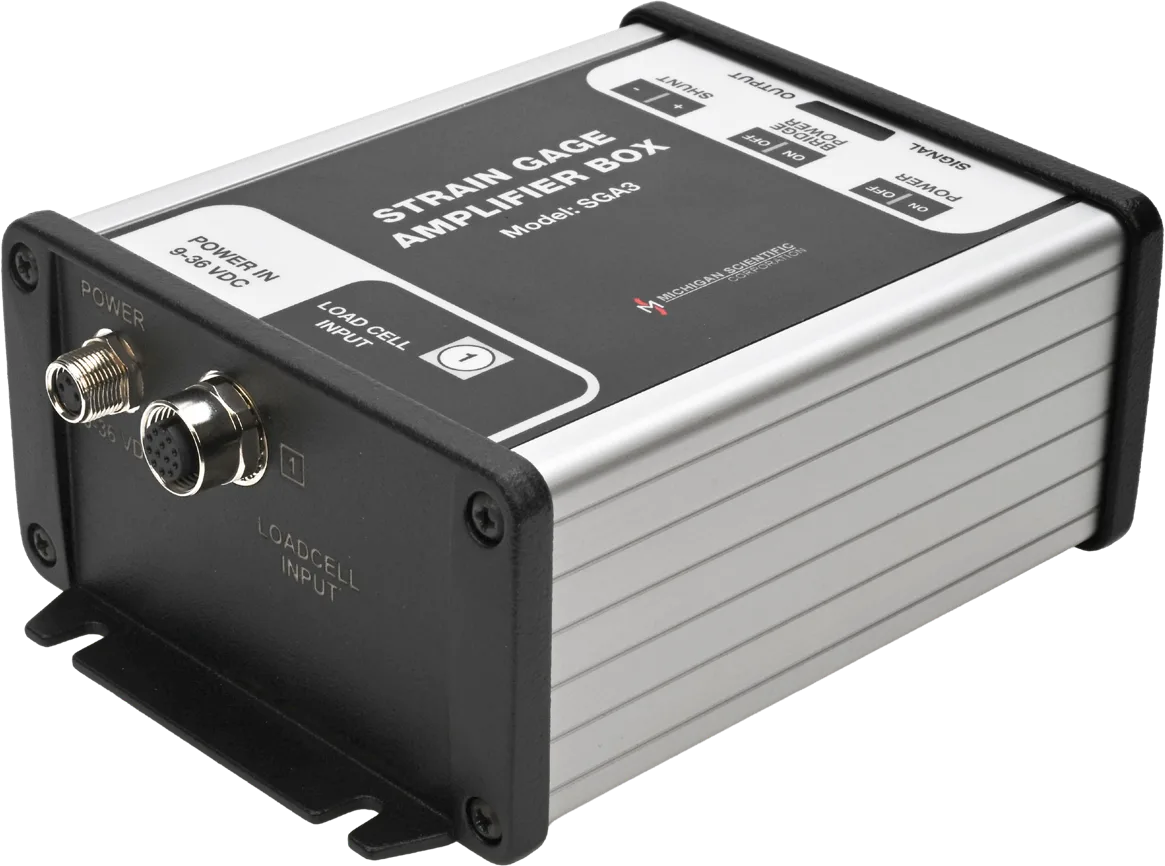
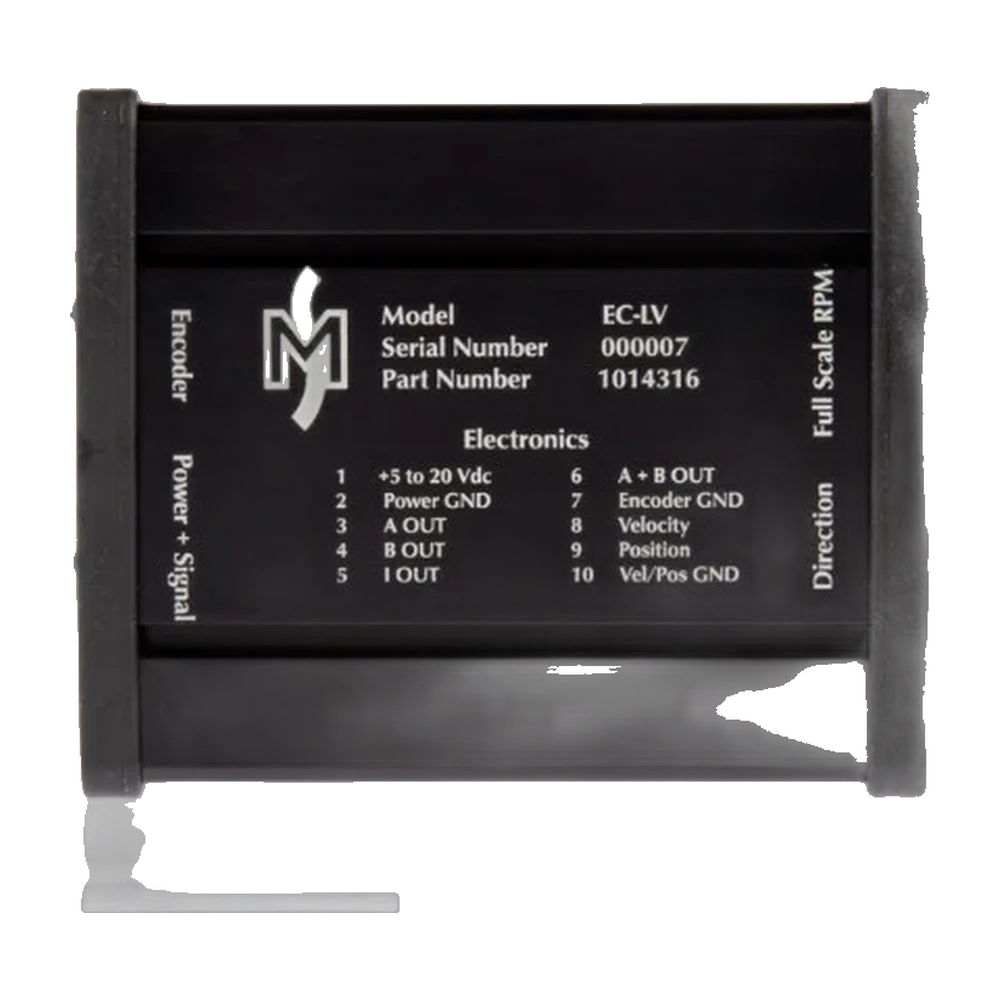
Off the rotating part, the SGA3, SGA6 and SGA12 boxes excite and amplify the bridges of one to four load cells, and the EC-LV turns encoder pulses into a ± 10 V speed voltage and a 0 to 10 V angle voltage.
Advantages
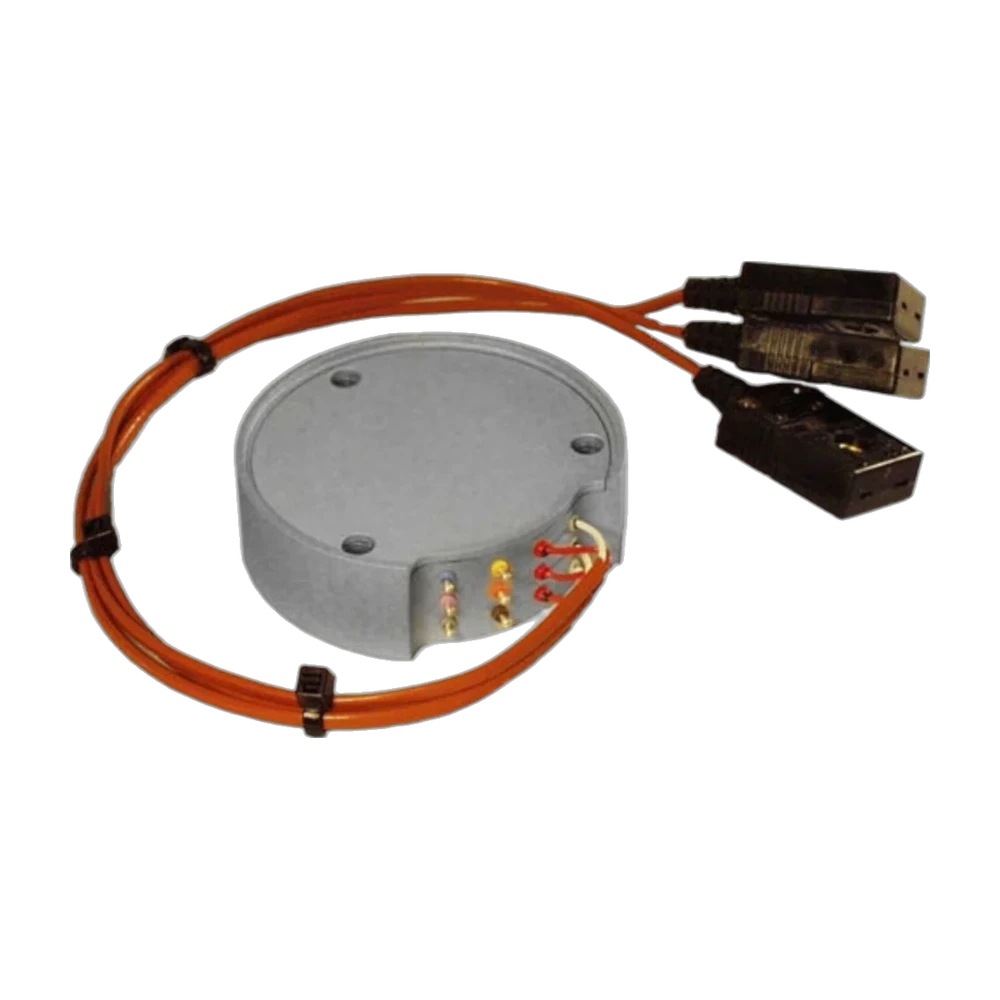
- On the rotorThe AMP-SG-U2 and the AMP-TCN-X2 mount on the rotor of an SR slip ring. The miniature units, from 3.9 g, are wired on the part itself.
- Strain gage bridgesLow-drift bridge excitation, a differential amplifier and a gain of 100 or 2000 V/V. Shunt calibration and excitation are switched remotely: the shunt checks the span, and with excitation off the output shows only the noise picked up.
- ThermocouplesTypes E, J, K and T, with cold junction compensation on the rotating side. The signal crosses the rings at a high level, which reduces the error from temperature gradients across their dissimilar metals.
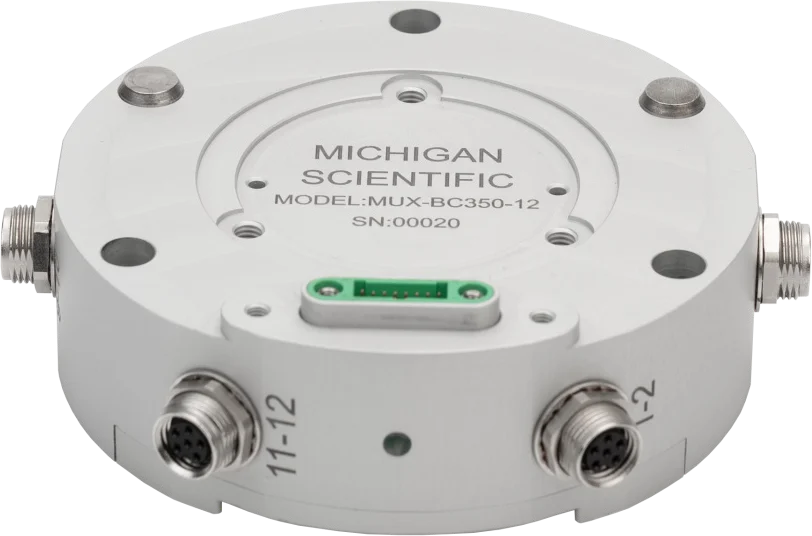
- Twelve channels on four ringsThe MUX-BC-12 completes, excites and digitizes twelve quarter-bridge gages onto one CAN or CAN FD bus: two rings for power, two for the bus, on an S4 slip ring.
Signal conditioning selection
Signal type, channel count. Models meeting every criterion, ranked by margin.
Set the criteria. Closest models first.
| Model | Channels | Actions |
|---|---|---|
| AMP-SG Strain gage amplifiers for the rotating side of a slip ring, ± 10 V output: modules on the rotor of SR series slip rings (1 to 3 bridges) or miniature single-channel units. | ||
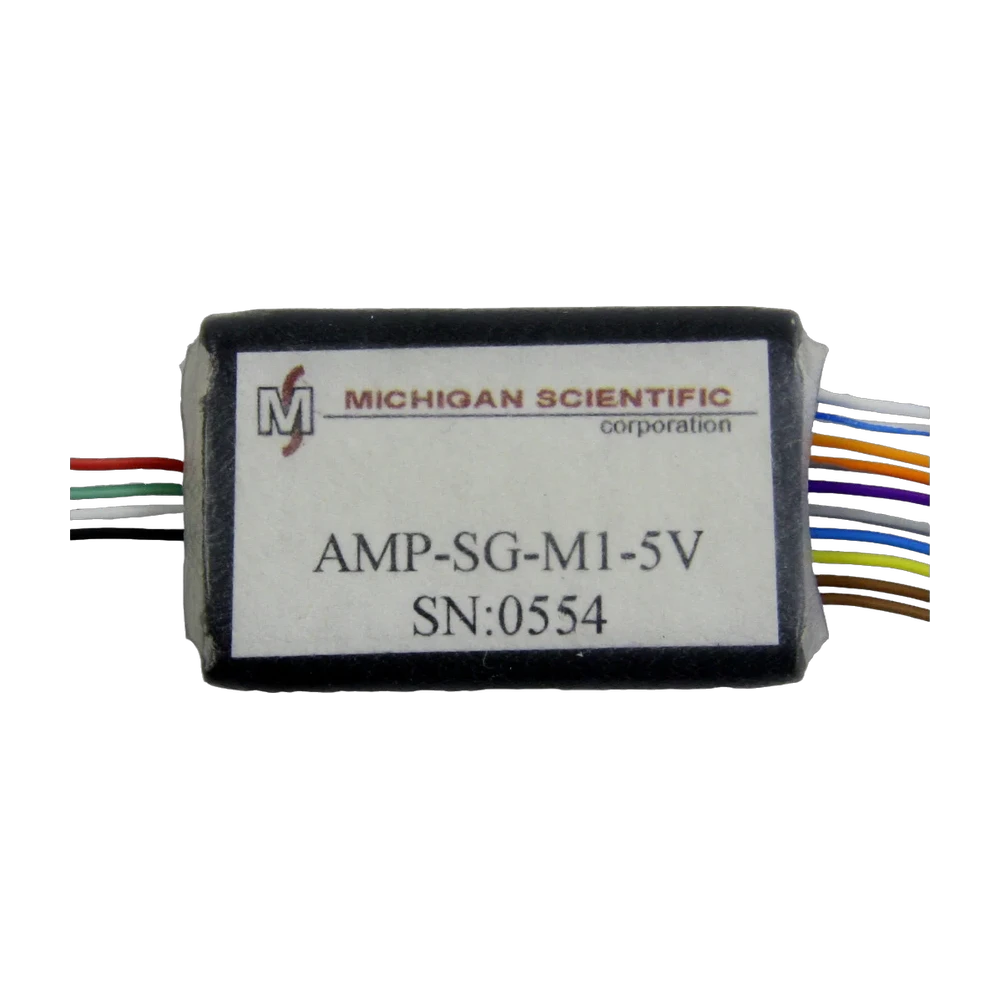
| AMP-SG-M1 | 1 | Request a quote Configure Datasheet |
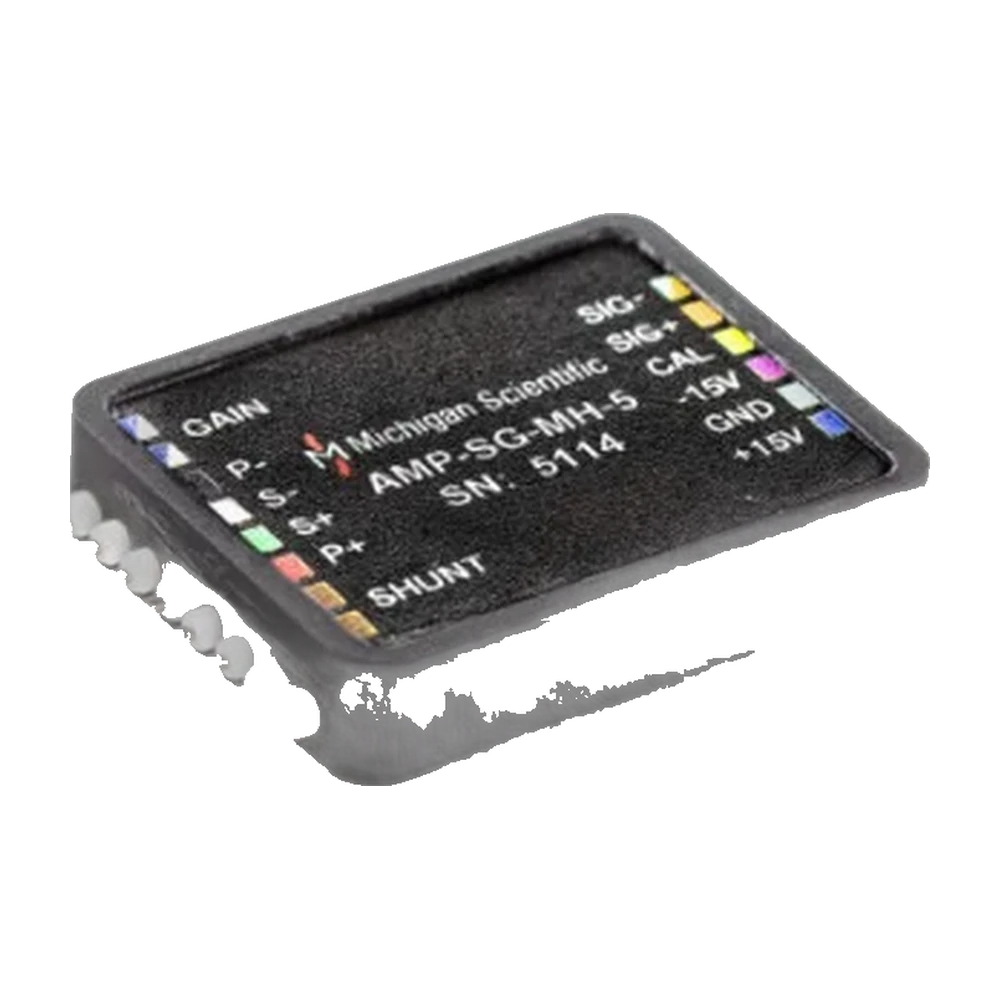
| AMP-SG-MH | 1 | Request a quote Configure Datasheet |
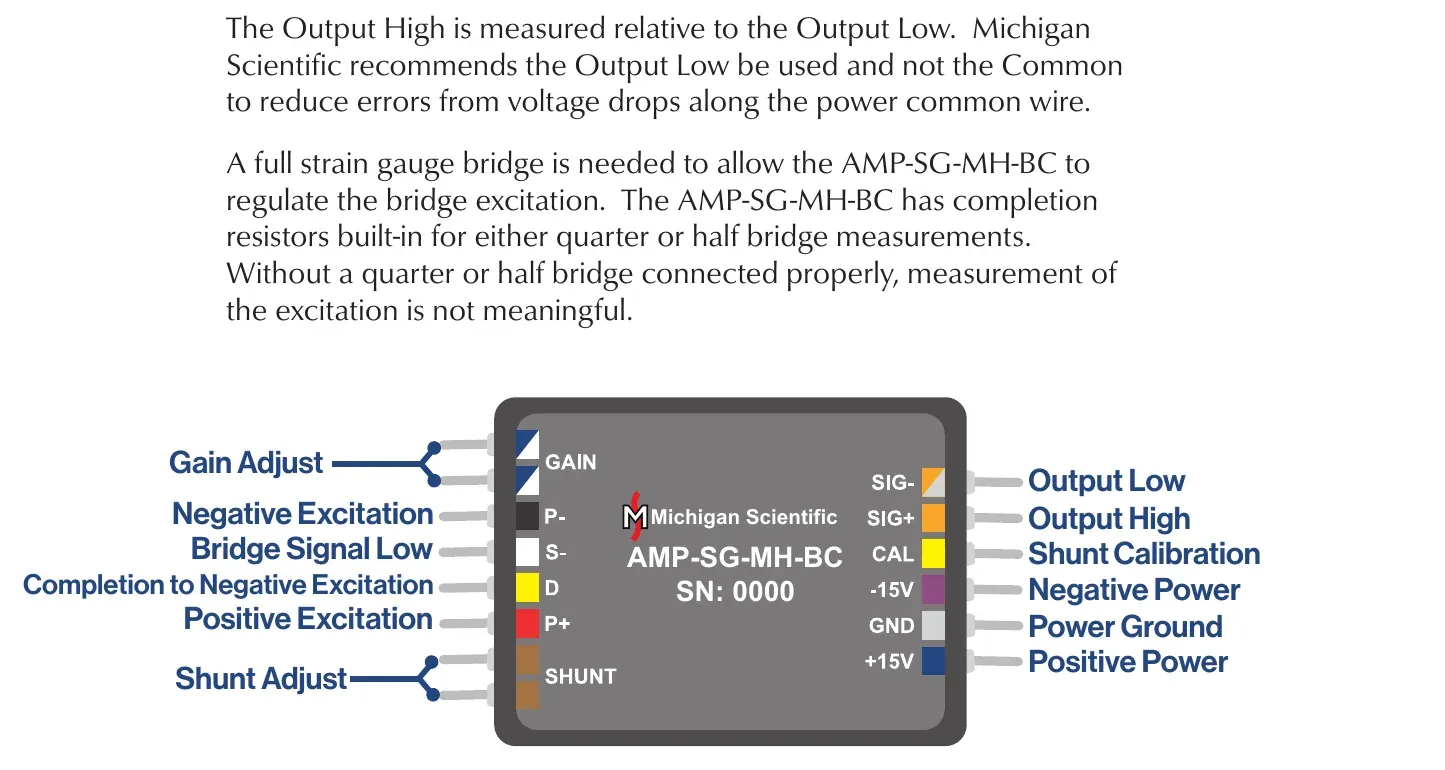
| AMP-SG-MH-BC | 1 | Request a quote Configure Datasheet |
| AMP-SG-U2 | 1 to 3 | Request a quote Configure Datasheet |
| SGA Strain gage amplifier boxes for Michigan Scientific multi-axis load cells: 3, 6 or 12 channels, ± 5 V bridge excitation, shunt calibration. | ||
| SGA | 3 to 12 | Request a quote Configure Datasheet |
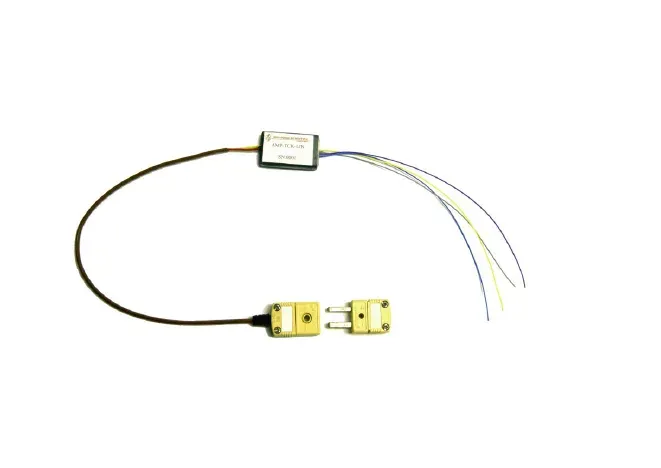
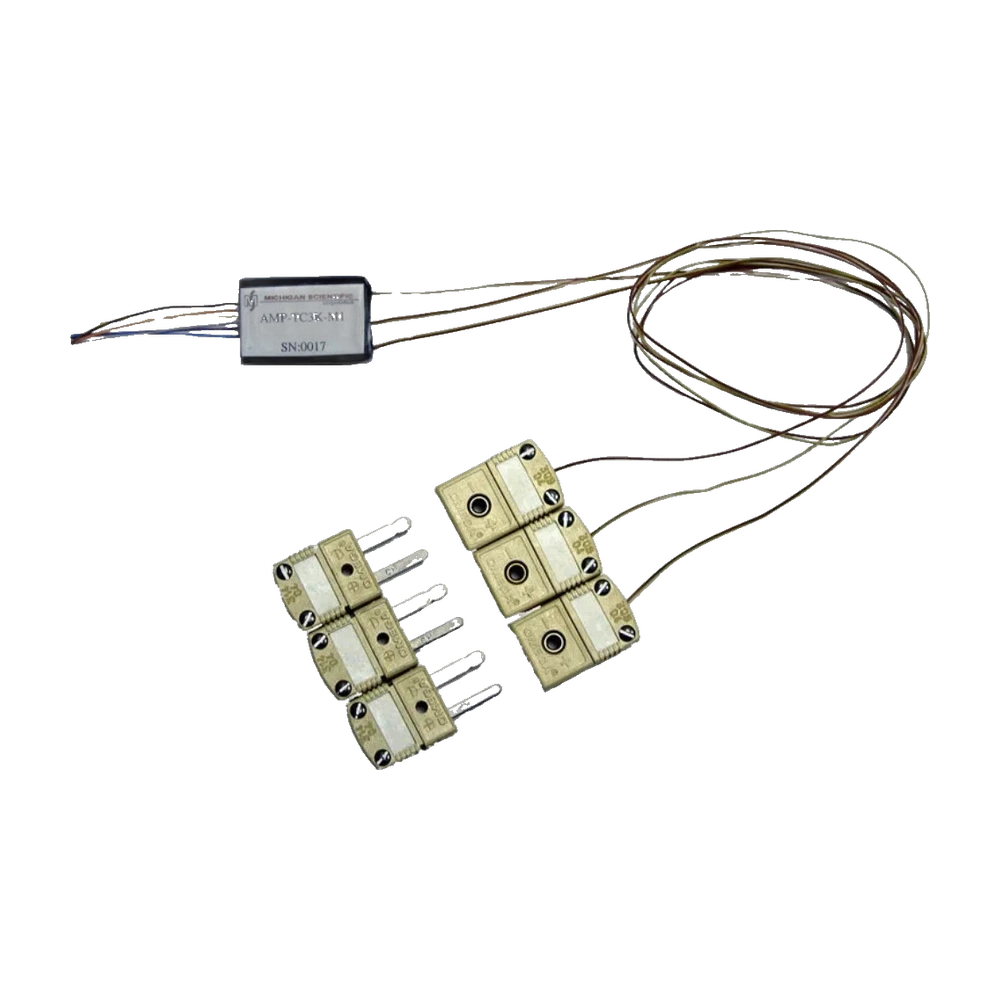
| AMP-TC Cold junction compensated thermocouple amplifiers for the rotating side of a slip ring, 10 mV/°C output: on the rotor of SR series slip rings (1 to 9 channels) or miniature (1 to 3 channels). | ||
| AMP-TC-LIN | 1 | Request a quote Configure Datasheet |
| AMP-TC-M1 | 1 to 3 | Request a quote Configure Datasheet |
| AMP-TCN-X2 | 1 to 9 | Request a quote Configure Datasheet |
| MicroTC Type K thermocouple connector and linear amplifier in one unit, cold junction compensated, 5 mV/°C output. | ||
| MicroTC | 1 | Request a quote Configure Datasheet |
| MUX Twelve-channel analog to CAN modules: sensor excitation, conditioning and digitization onto one CAN 2.0 or CAN FD bus, up to 8 ksps, stackable to 48 channels. | ||
| MUX-12 | 12 (per module, stackable to 48 with four modules) | Request a quote Configure Datasheet |
| EC-LV In-line encoder signal conditioner: angular velocity and angular position as DC voltages. | ||
| EC-LV | — | Request a quote Configure Datasheet |
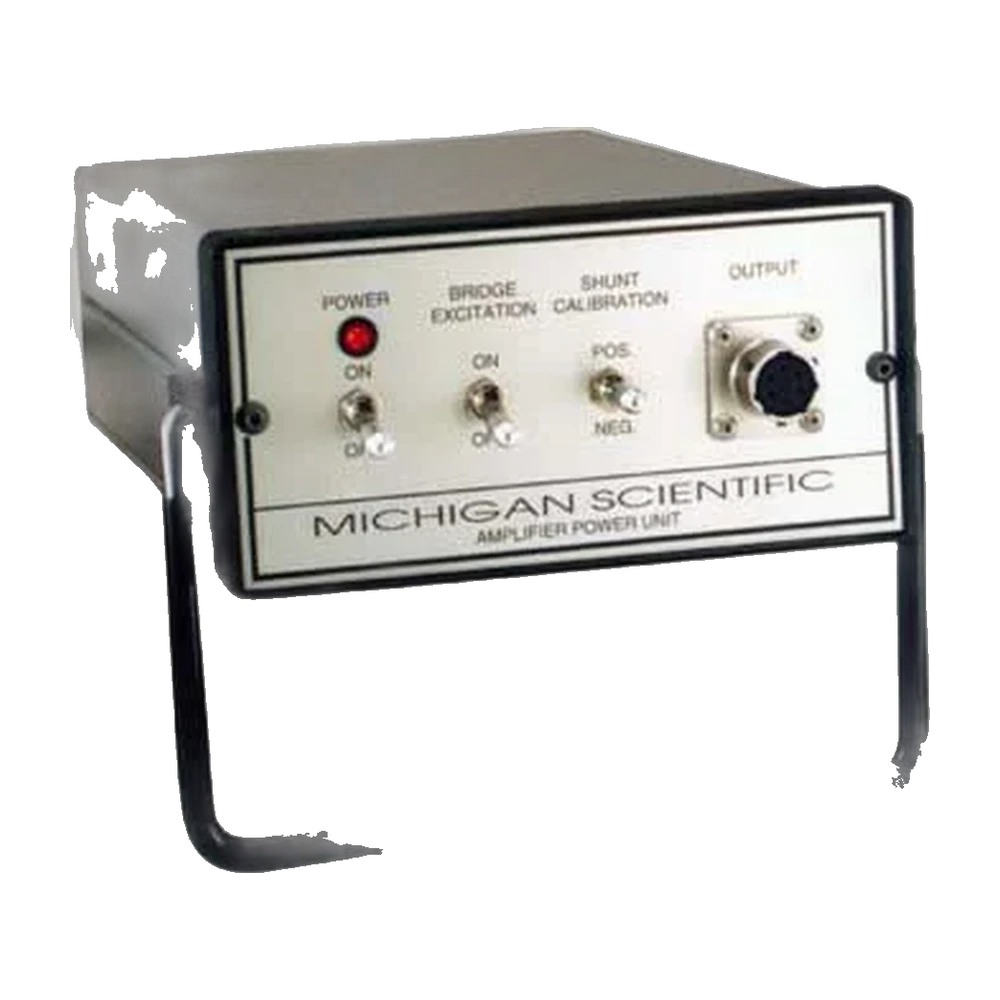
| PS Remote amplifier control units for Michigan Scientific spinning amplifiers: ± 15 V supply, remote bridge excitation on/off and shunt calibration, on a DC supply (PS-DC) or AC mains (PS-AC). | ||
| PS-DC and PS-AC | — | Request a quote Configure Datasheet |
No catalogue model meets every criterion. Custom versions exist: ask us.
Bridge resistance, excitation and gain known? Send them, an application engineer selects the amplifier. Send the data
Applications
-
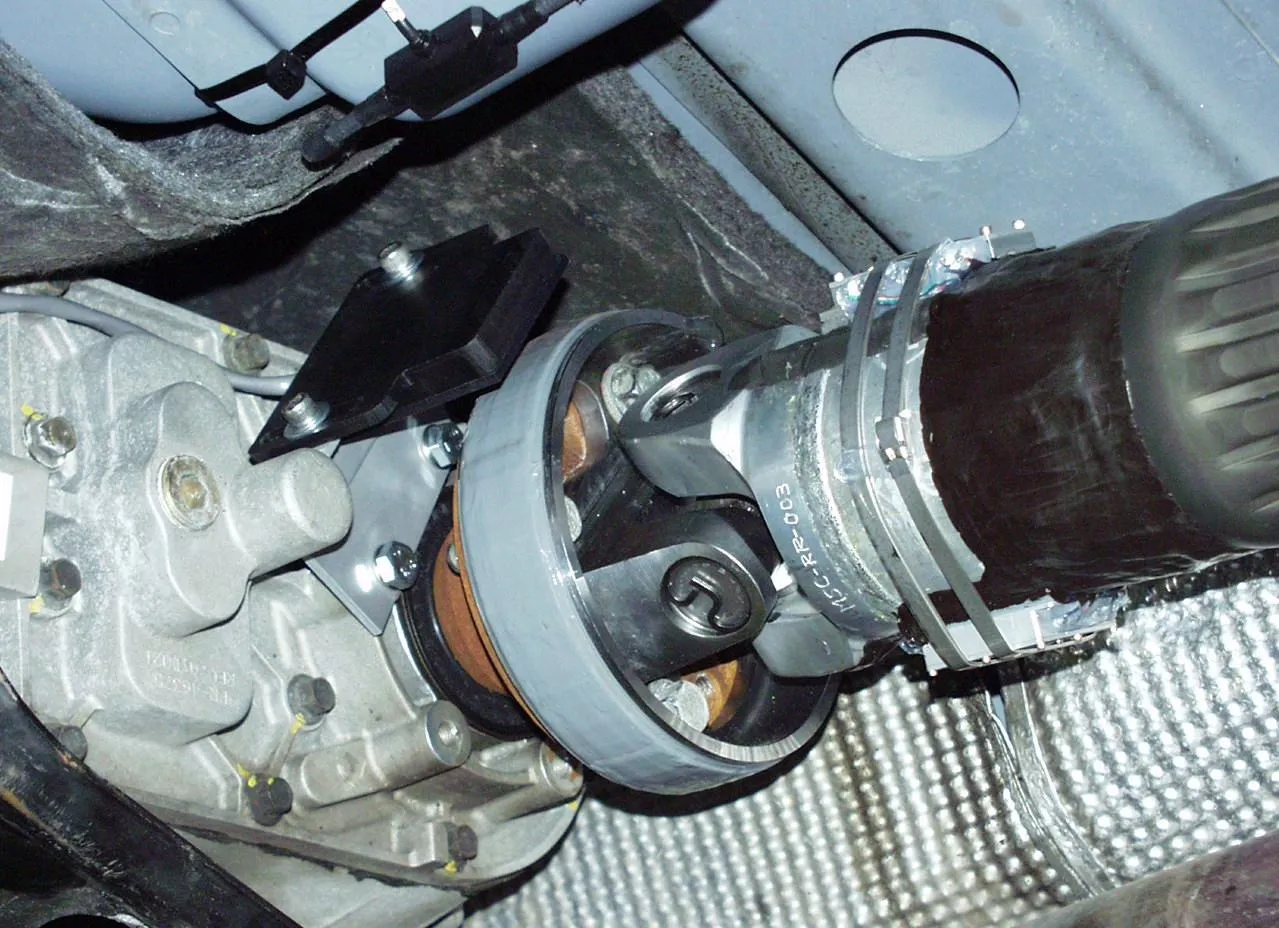 Powertrain Drive shaft measurements Torque, strain and temperature from a drive shaft with no free end, through a slip ring that slides over the shaft.
-
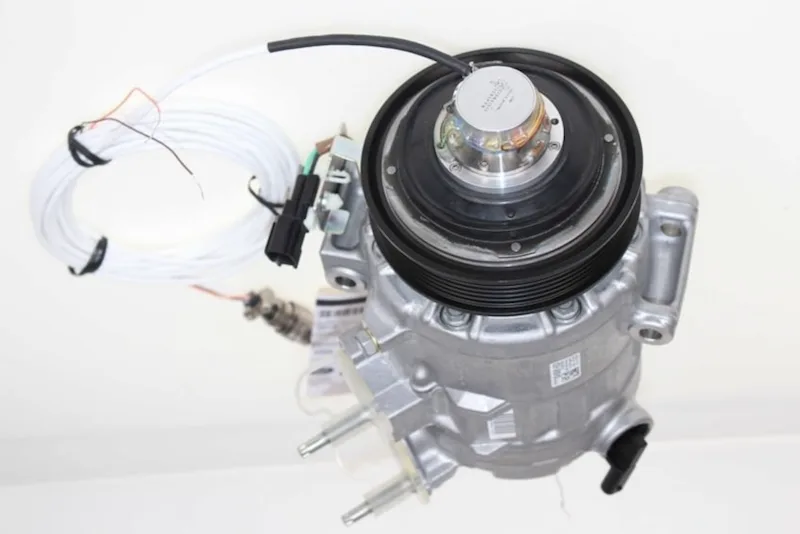 Powertrain Accessory belt pulley torque Torque on an accessory drive pulley, from a strain gage bridge on the pulley and a slip ring on the shaft end.
-
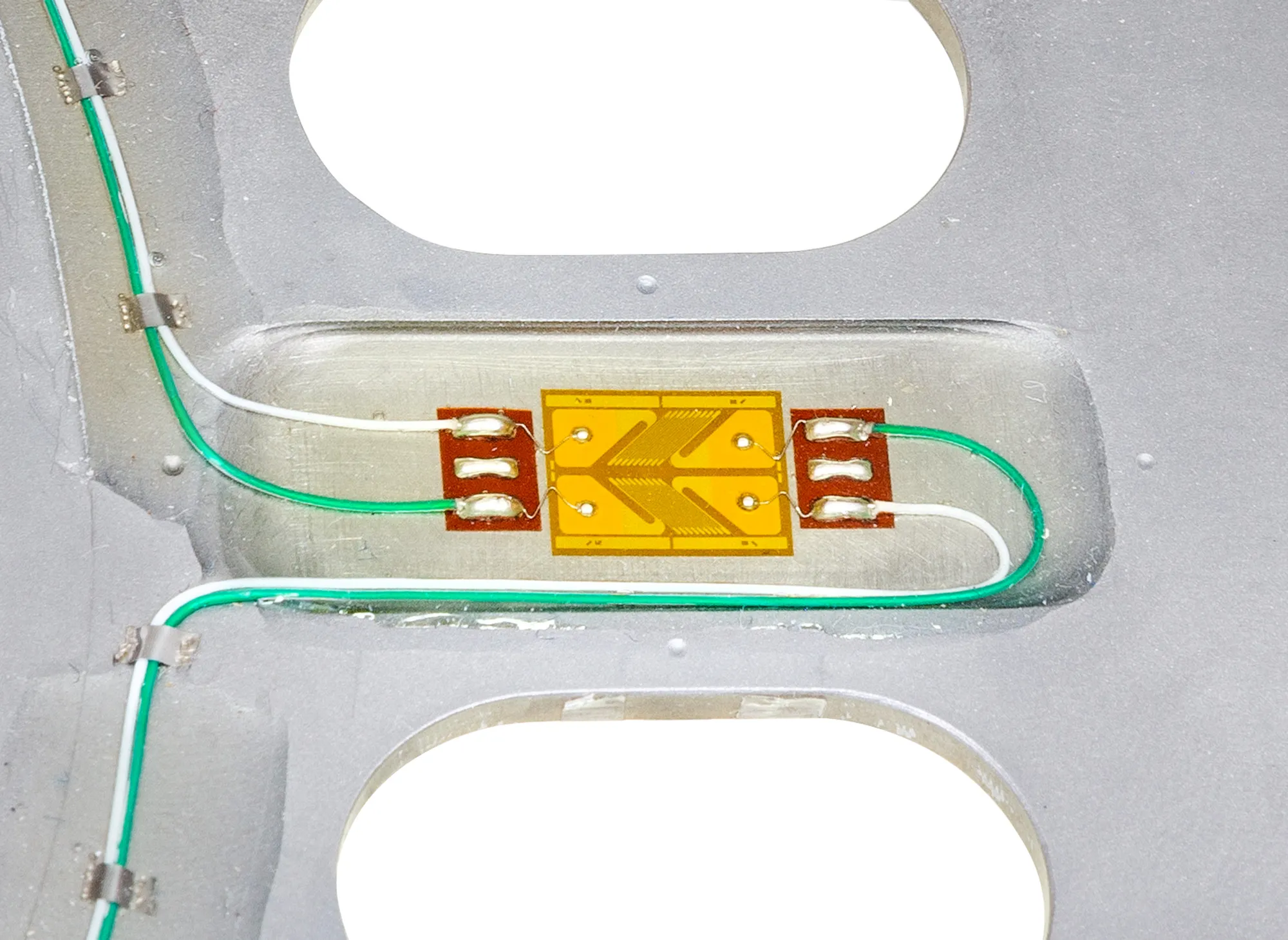 Engine Crankshaft measurements Torque, bending and strain on the production crankshaft with the engine running, in the vehicle or on the dyno.
-
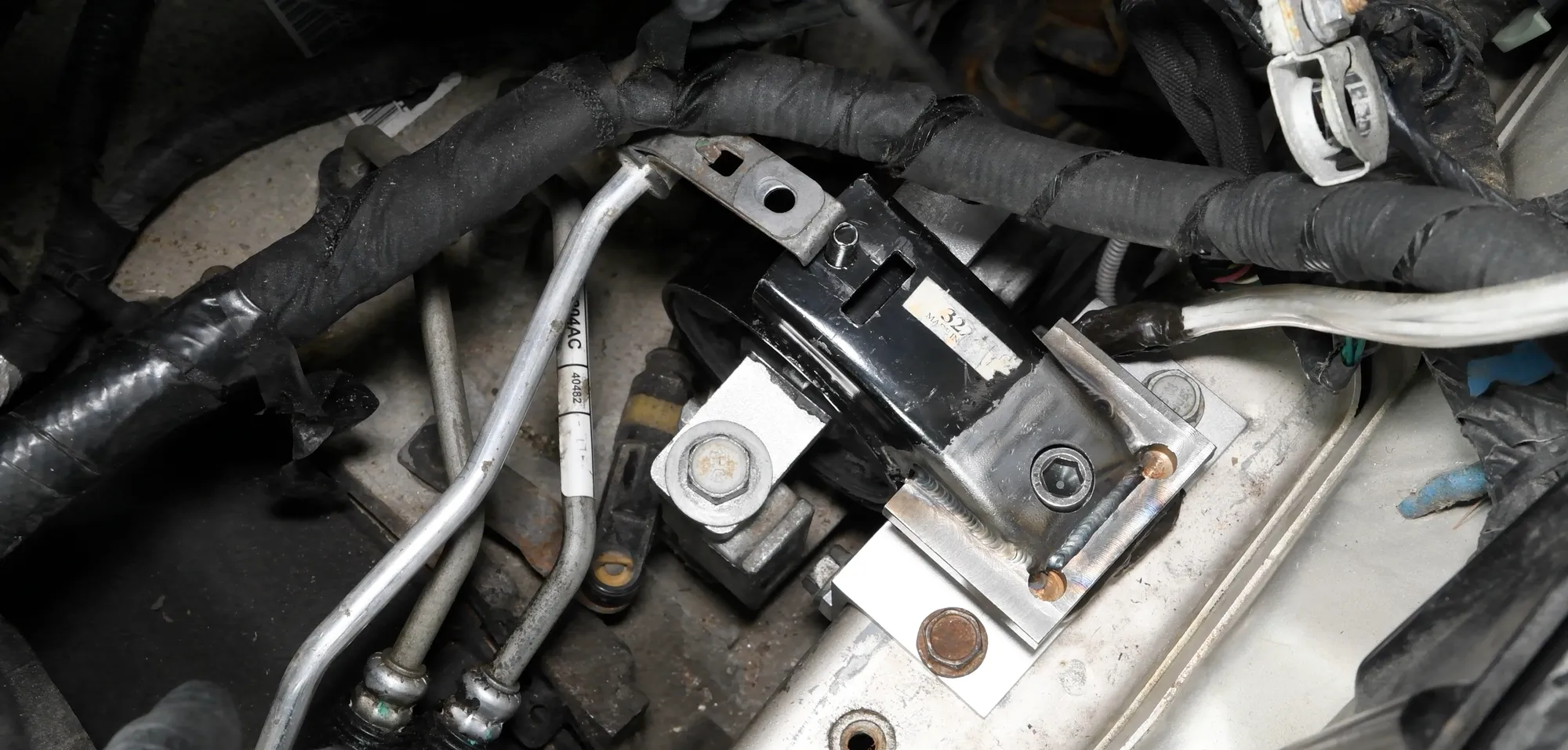 Component Engine mount loads The three forces each mount passes to the frame during start-up, acceleration and gear shifts.
Services around the product
Support, calibration and custom parts, from the same team.
-
 Service Technical support An application engineer answers, and a loan unit covers an urgent breakdown. See the service
-
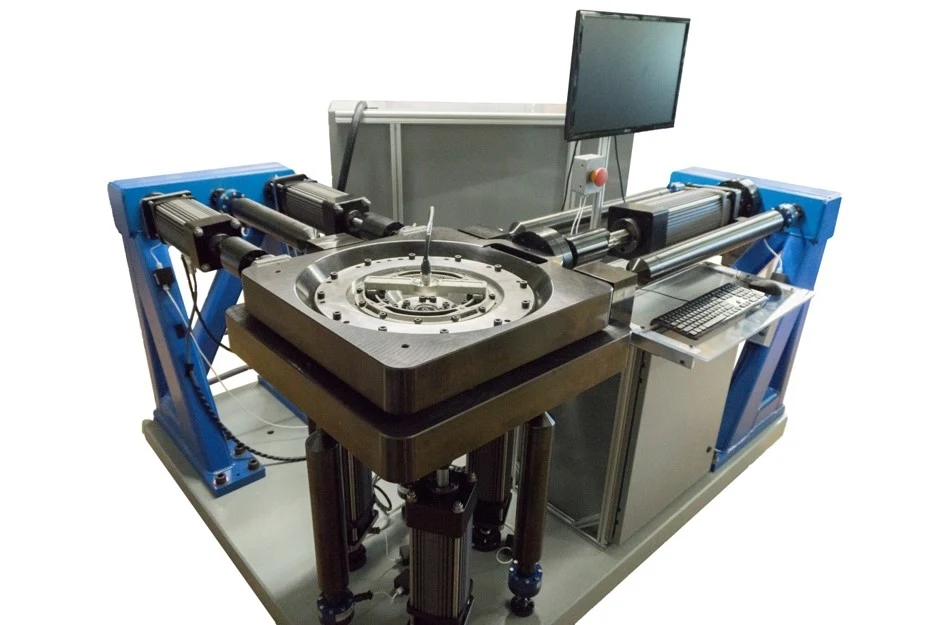 Service Calibration Accredited ISO/IEC 17025 calibration, 1 to 6 axes, for Michigan Scientific transducers and those of other manufacturers. See the service
-
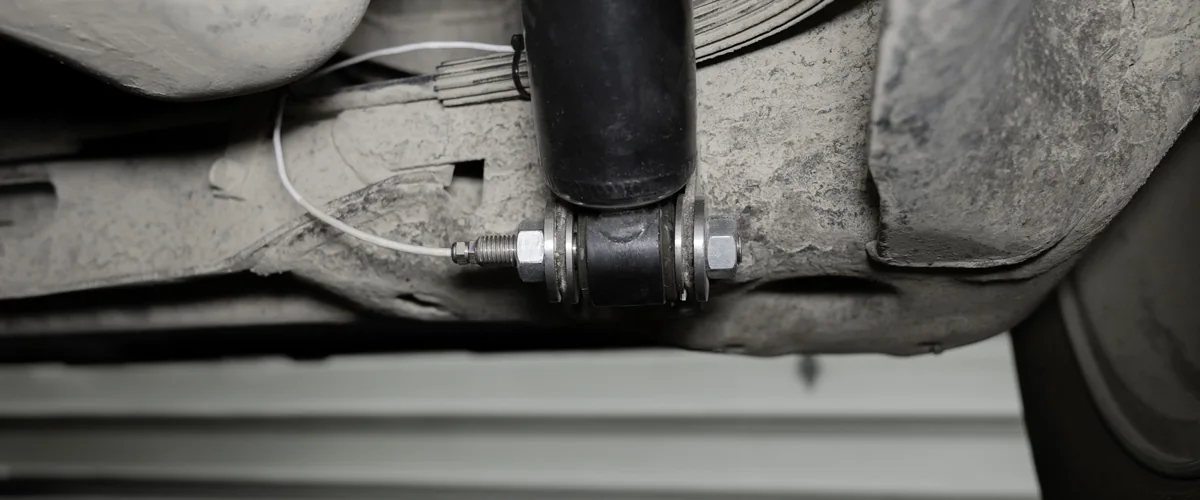 Service Custom transducers Your own part strain gaged and calibrated, or a transducer designed for your space and load case. See the service
Technical data and documents
- Detail page
AMP-SG-MH
Miniature single-channel strain gage amplifier with solder terminals, 40.54 × 25.4 × 6.86 mm and 11 g, ± 10 V output, placed on the rotating side before the slip ring.
Open the AMP-SG-MH - Detail page
AMP-SG-U2
Spinning strain gage amplifier modules for one, two or three bridges, Ø 53 mm, piloted on the rotor of SR series slip rings and stackable, with ± 10 V output.
Open the AMP-SG-U2 - Detail page
SGA
Strain gage amplifier box for Michigan Scientific multi-axis load cells, with 3, 6 or 12 channels: bridge excitation, shunt calibration and a ± 10 V output per channel.
Open the SGA - Detail page
AMP-TC-M1
Miniature thermocouple amplifier, one to three cold junction compensated channels, types K, J, T or E, 10 mV/°C output, 30 × 20 × 6 mm, for the rotating side before the slip ring.
Open the AMP-TC-M1
Technical support
An application engineer answers within 24 hours on working days. When equipment fails during a campaign, diagnosis is remote and a loan unit can be shipped, depending on the project.
How support works- < 24 h
- first answer from an application engineer
- Over 30
- wheel force transducers in the loan and rental fleet
- 1 to 2 weeks
- typical calibration turnaround
Which amplifier for your sensor?
Sensor type, number of channels, slip ring or load cell it works with. An application engineer answers with a reference and a price.
More details to give? Use the full contact form.