
Slip ring assemblies
Strain and temperature signals off a hub, a disc or a shaft, without losing them to noise.
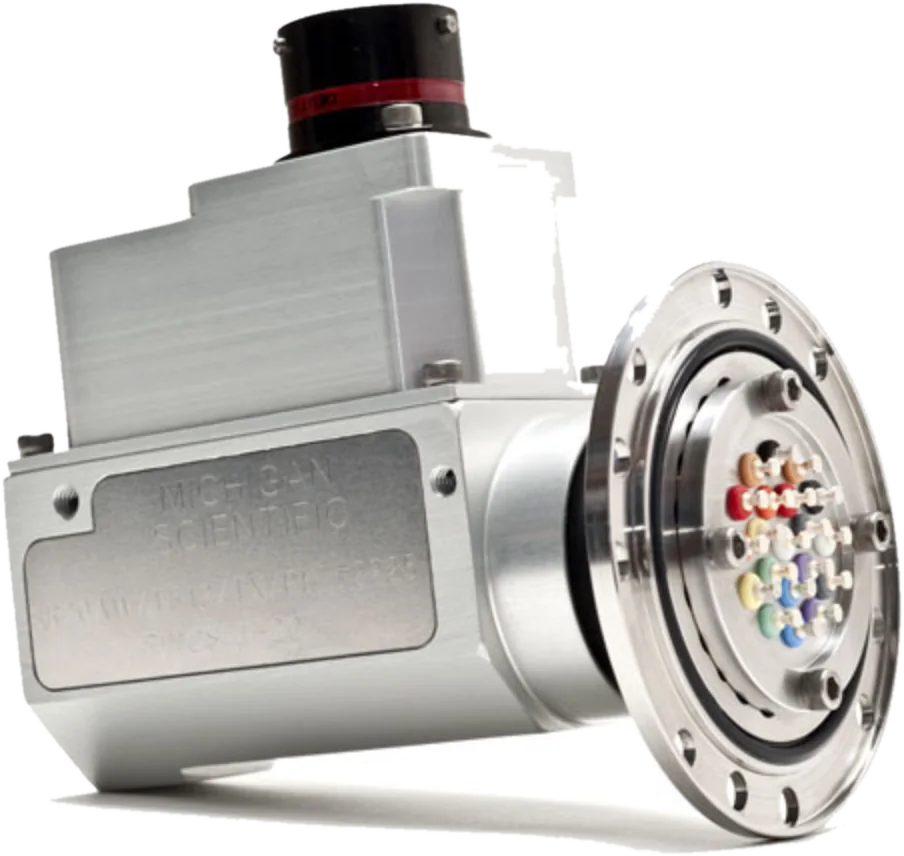
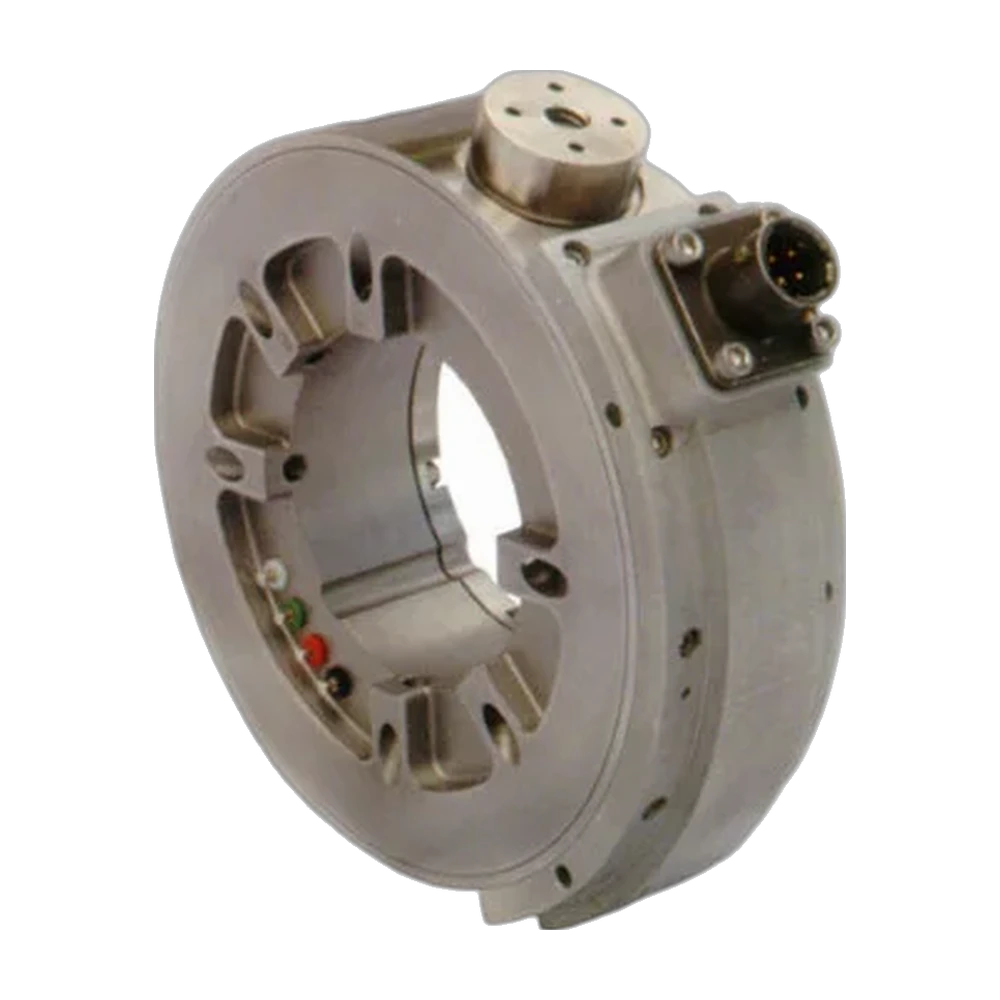
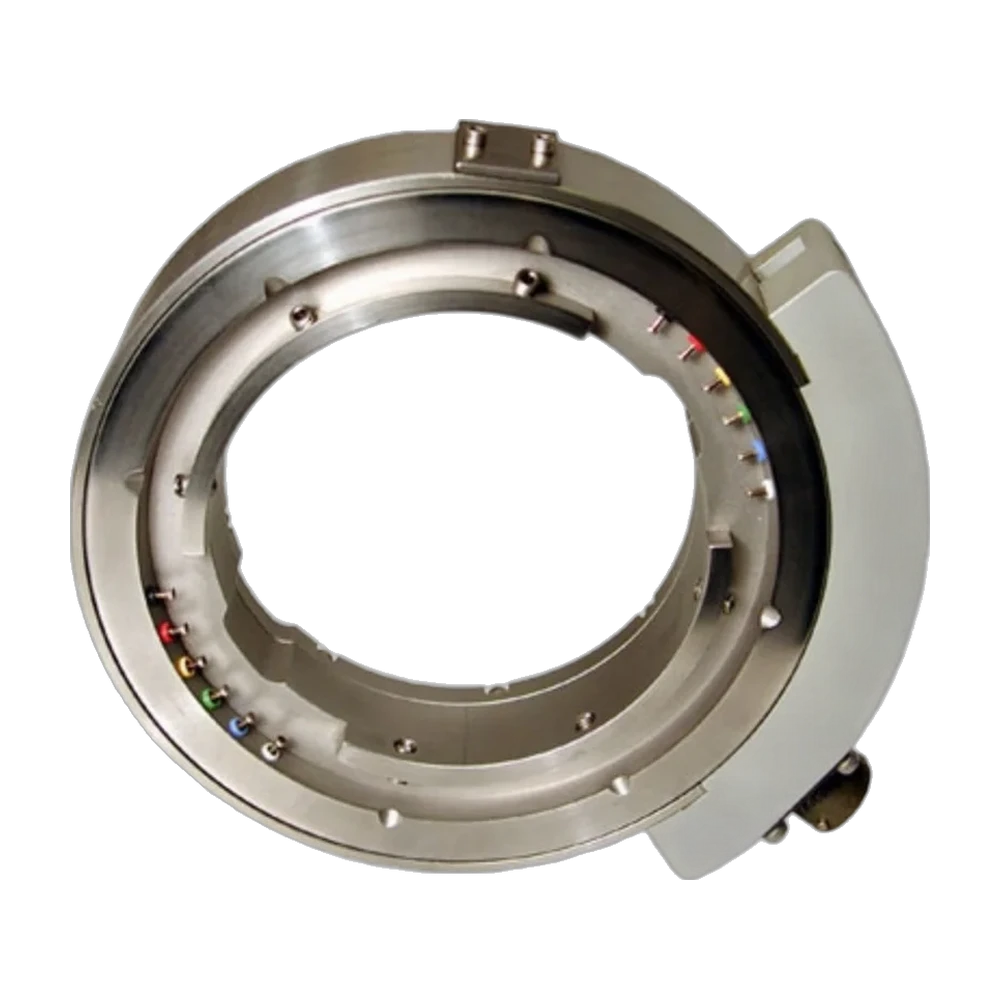
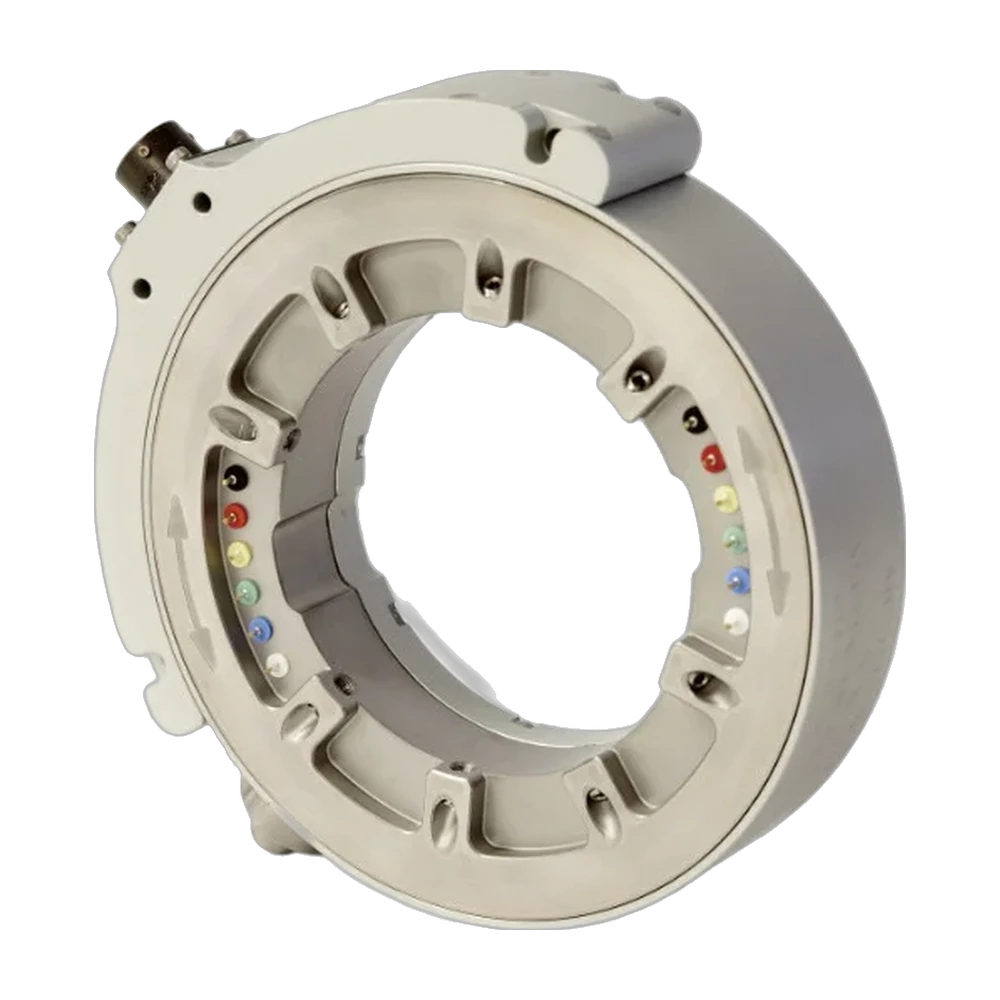
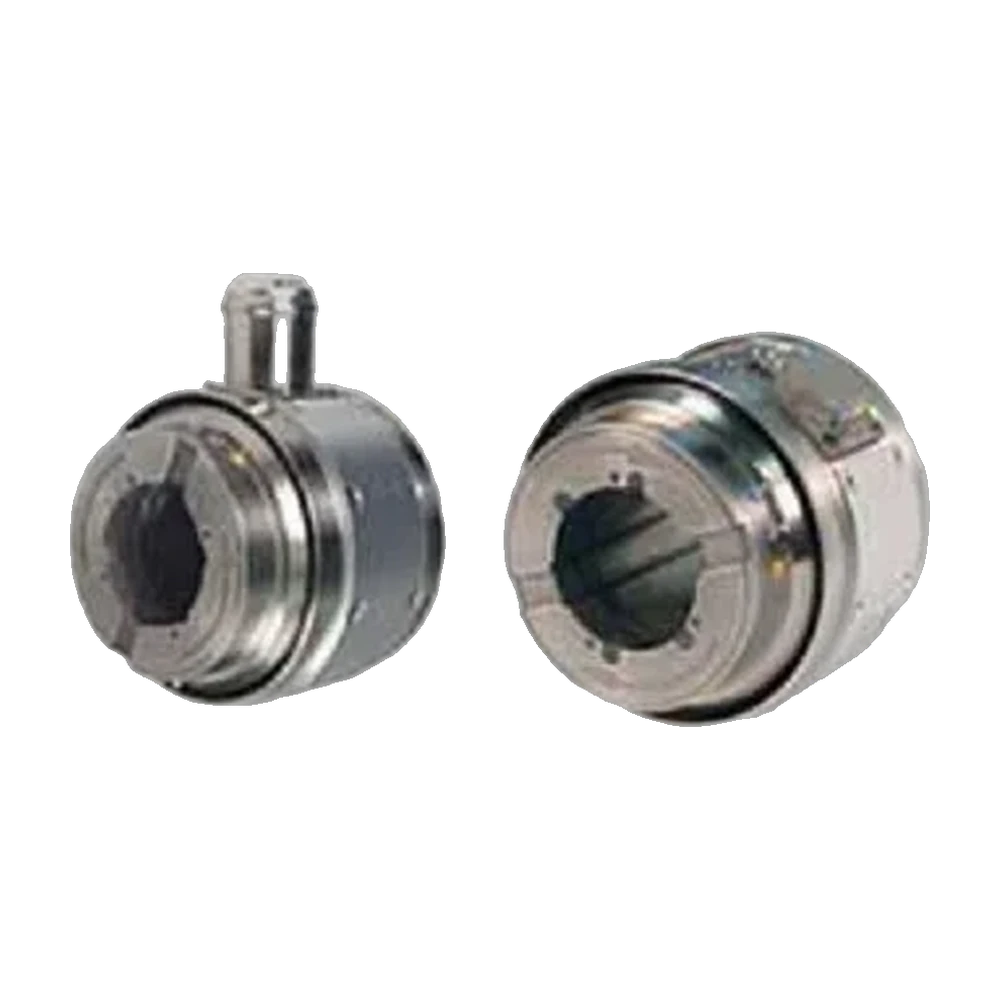
Precious-metal brushes and rings carry each sensor wire from the rotating part to the stationary recorder, in analog form. A slip ring costs less than most non-contact systems. Used with strain gages, thermocouples, ICP accelerometers and RTDs, at the end of the shaft or through the bore.
- 4 to 60
- circuits per assembly
- 12 000 rpm
- top speed, across the range
- 60 to 512 ppr
- built-in encoder options
- < 100 mΩ
- contact resistance (3σ)
A sliding contact, quiet enough for microvolts.
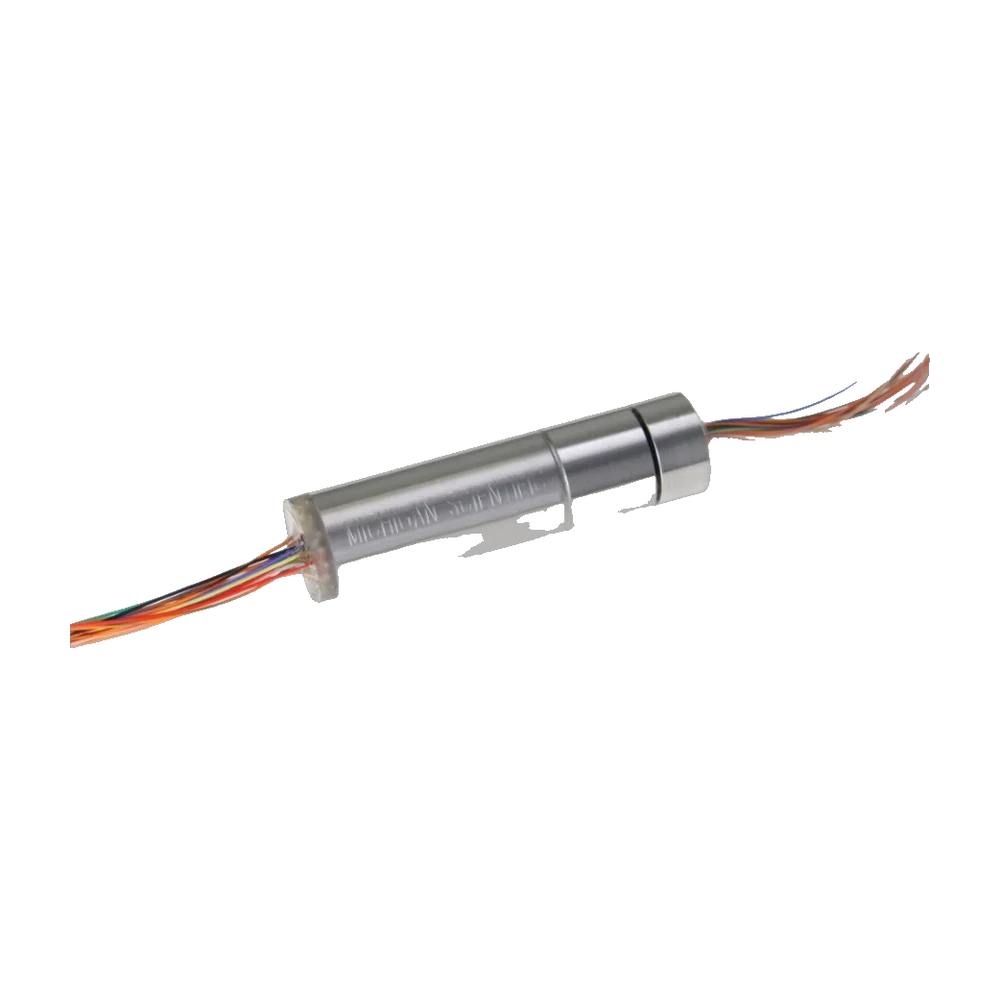
A slip ring keeps each wire of a turning sensor connected to a recorder that does not turn. The rotor turns with the shaft, brushes ride on its rings, and the stator hands the signals to the data acquisition system.
Wire a strain gage bridge with all four arms on the rotor and the rings sit outside the bridge: they do not change its balance, and peak ring noise stays under 0.1 % of the signal.
Advantages
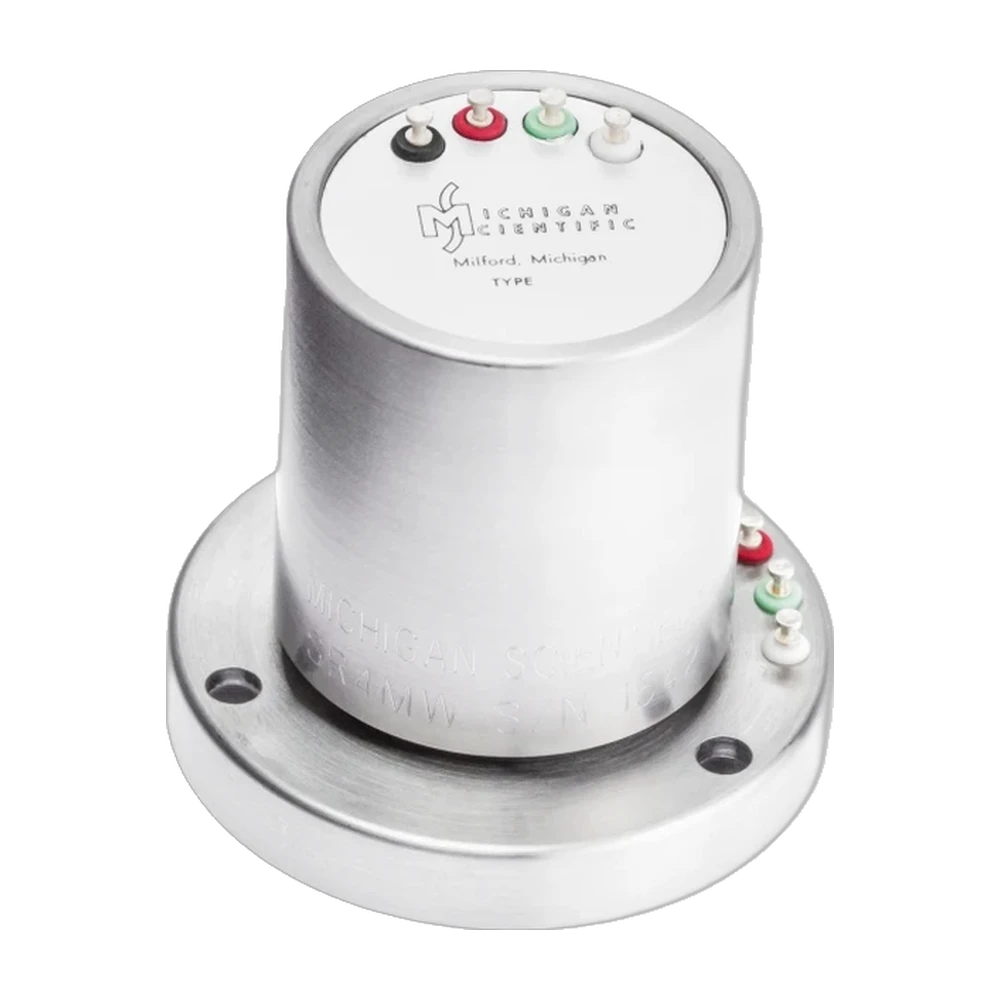
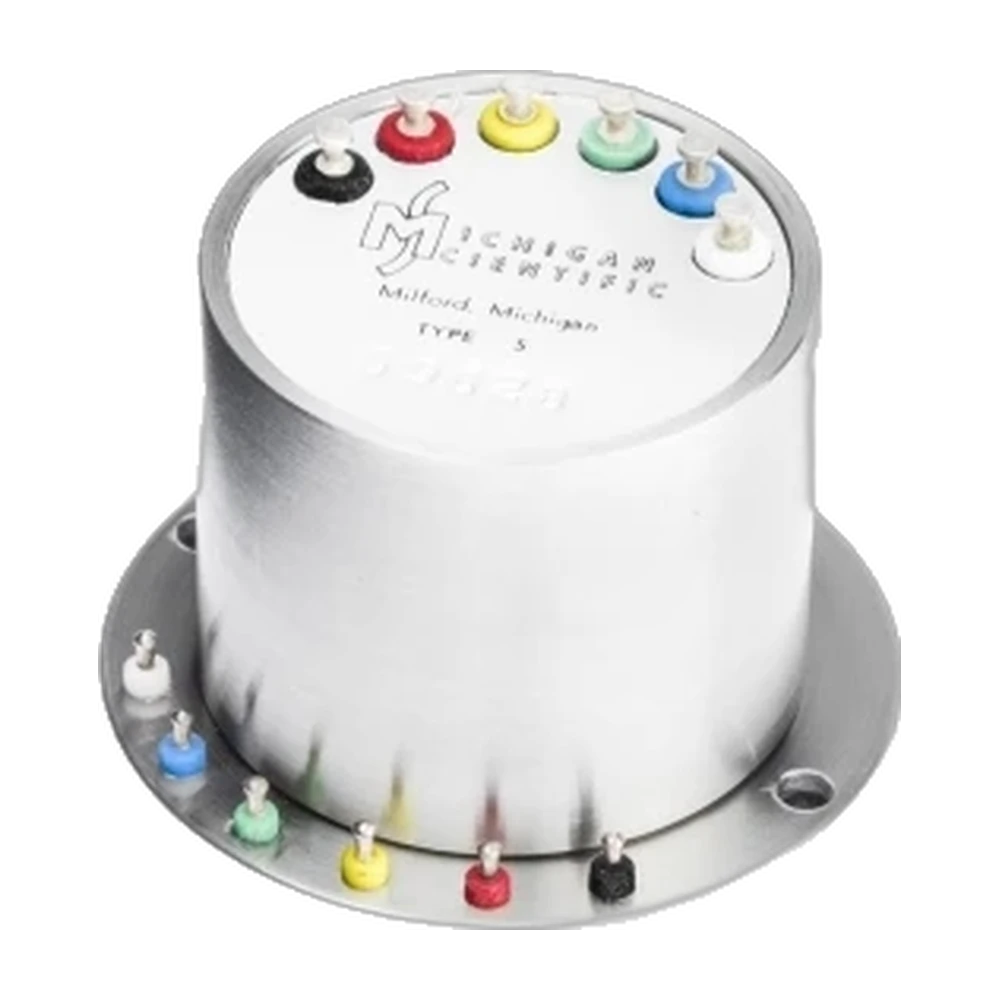
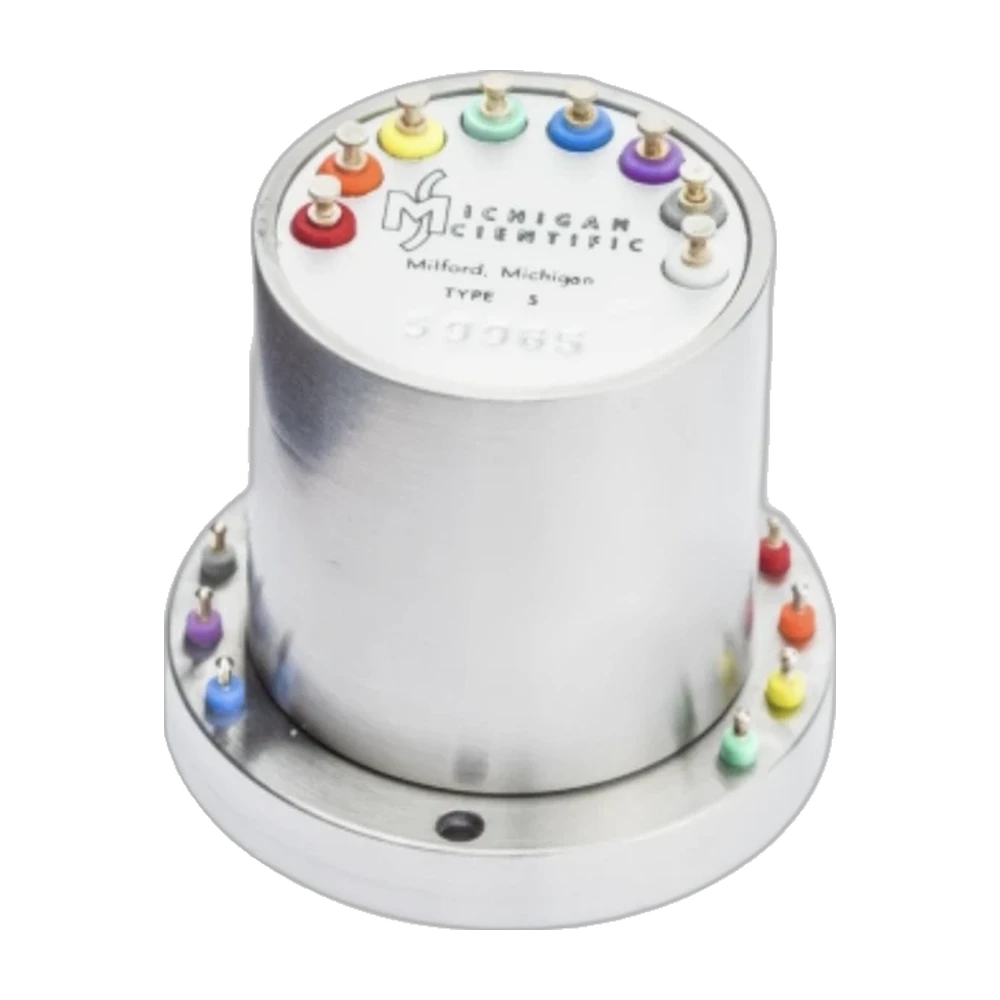
- The rotorIt turns with the shaft. The sensor wires land on color-coded solder terminals or on a connector, with spare terminals as back-up.
- The contactBrushes ride on rings, both in wrought precious metals, which keeps contact resistance variation low: 0.1 Ω maximum peak noise on the S-Series. Low enough for strain gage bridges and thermocouples, with no limit on bandwidth.
- What it can addAn encoder in the same assembly gives shaft speed and angle: 60 ppr on the /E60 versions of the SR Series and the B-Series, 256 to 512 ppr on the SR/ERT, whose built-in electronics can add tachometer or resolver outputs. An AMP-SG-U2 or AMP-TCN-X2 amplifier on the rotor of an SR slip ring raises the signal to a high level before it crosses the contacts.
Slip ring selection
Mounting, embedded amplifier, circuit count, encoder, speed, rotor diameter, sealing. Models meeting every criterion, ranked by margin.
Set the criteria. Closest models first.
| Model | Embedded amplifier | Circuits | Encoder (ppr) | Max speed (rpm) | Rotor diameter (mm) | Weatherproof | Actions |
|---|---|---|---|---|---|---|---|
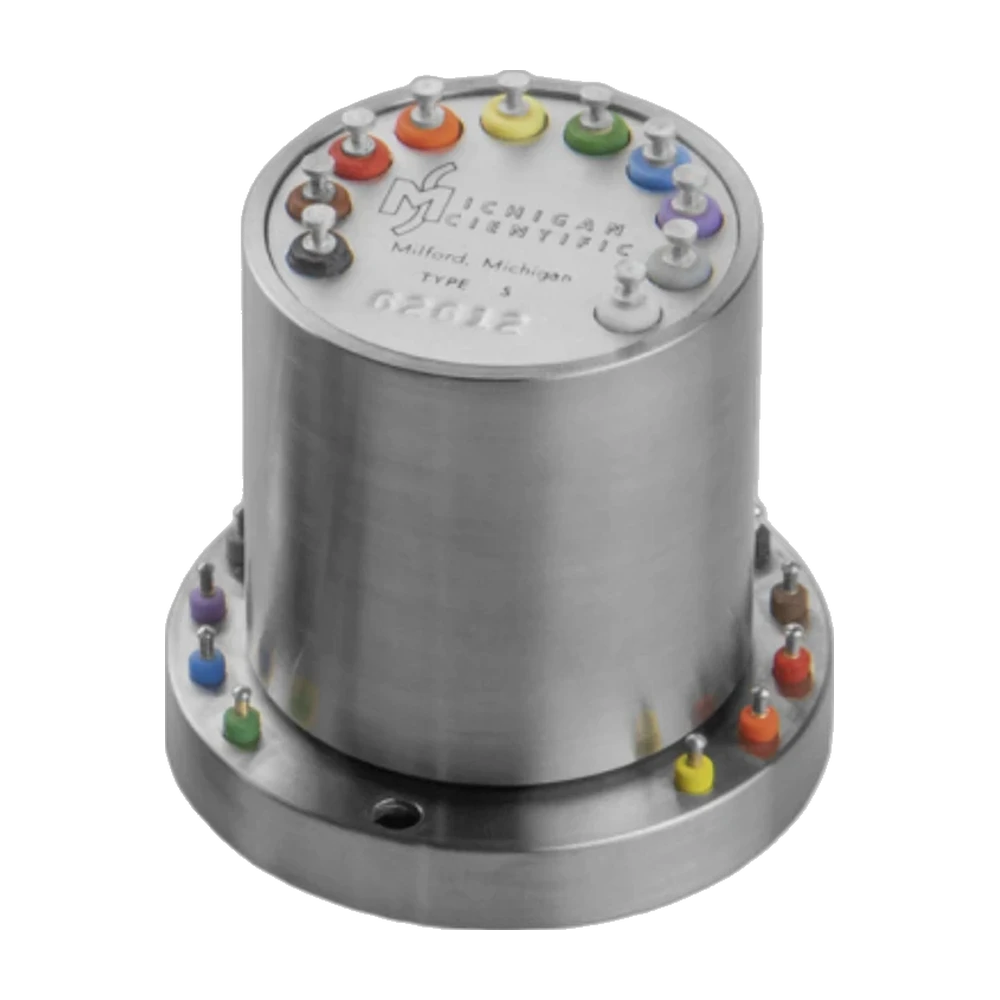
| S-Series End-of-shaft slip rings, 4 to 10 circuits, 12 000 rpm, for low-level instrumentation signals. S-Series user manual | |||||||
| S4 | — | 4 | — | 12 000 | 41.28 | — | Request a quote Configure Datasheet |
| S6 | 1 × strain gage · 3 × thermocouple | 6 | — | 12 000 | 41.28 to 50.8 | — | Request a quote Configure Datasheet |
| S8 | 2 × strain gage | 8 | — | 12 000 | 41.28 to 50.8 | — | Request a quote Configure Datasheet |
| S10 | 6 × thermocouple | 10 | — | 12 000 | 41.28 to 50.8 | — | Request a quote Configure Datasheet |
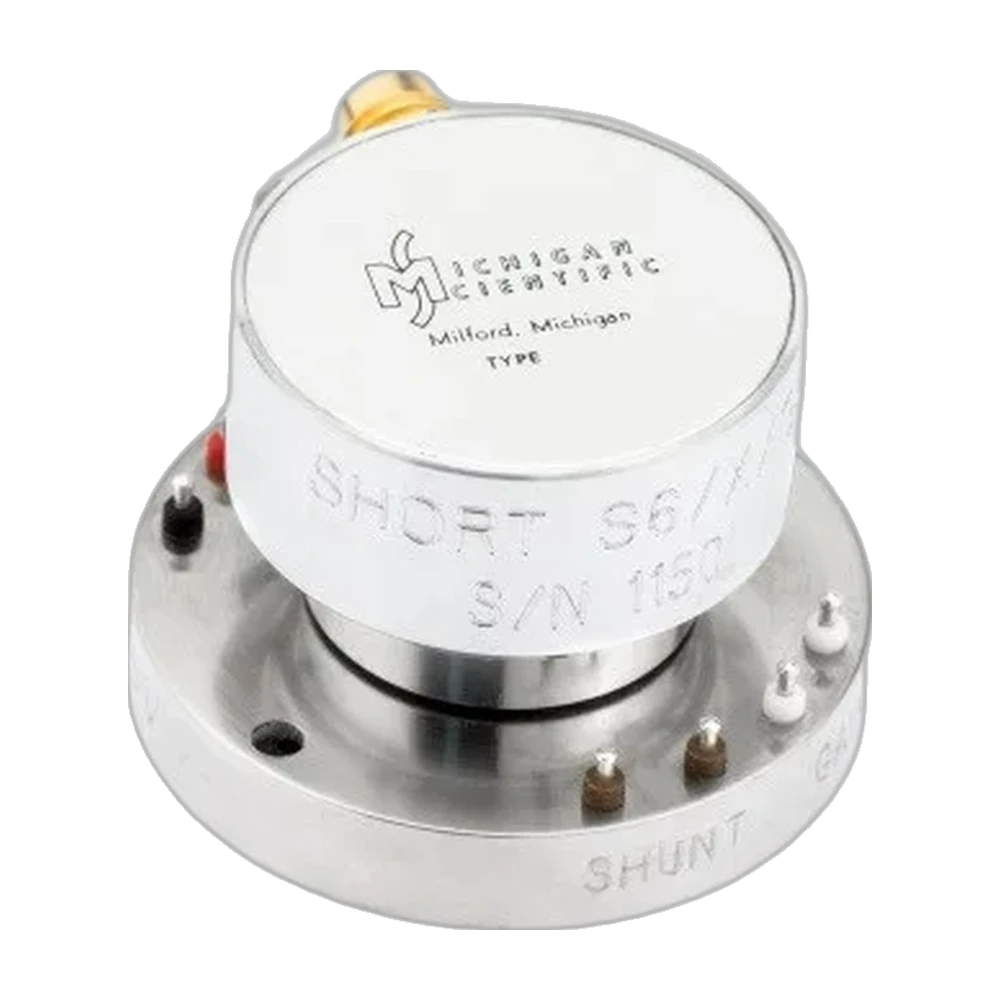
| Short S-Series Compact end-of-shaft slip rings, 4 to 10 circuits, 12 000 rpm, from 22 mm long. S-Series user manual | |||||||
| Short S4 | 1 × thermocouple | 4 | — | 12 000 | 41.28 | — | Request a quote Configure Datasheet |
| Short S6 | 1 × strain gage · 3 × thermocouple | 6 | — | 12 000 | 41.28 | — | Request a quote Configure Datasheet |
| Short S8 | 2 × strain gage · 4 × thermocouple | 8 | — | 12 000 | 41.28 to 50.8 | — | Request a quote Configure Datasheet |
| Short S10 | 7 × thermocouple | 10 | — | 12 000 | 41.28 to 50.8 | — | Request a quote Configure Datasheet |
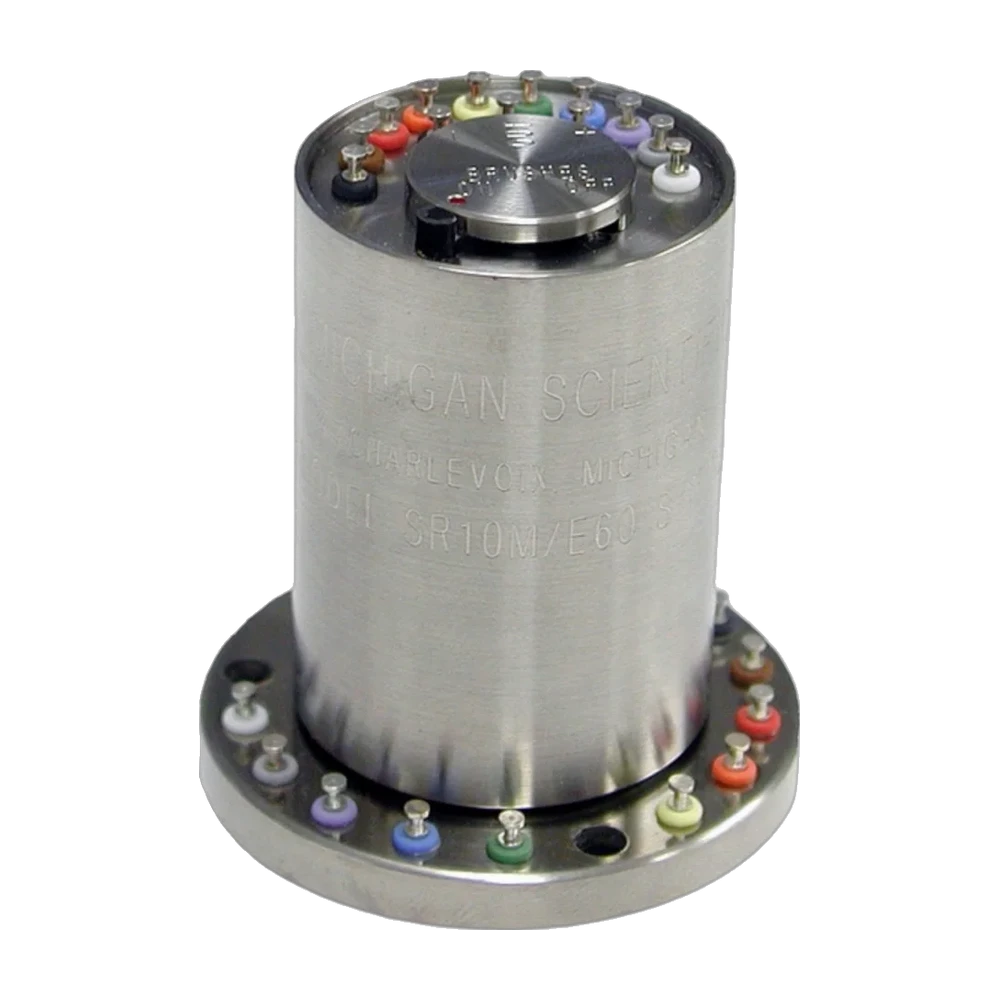
| SR Series End-of-shaft slip rings: 4 to 60 circuits, from the 19 mm SR20/75/W to 63.5 mm rotors, open or weatherproof, with or without a 60 ppr encoder. | |||||||
| SR-AW/ | — | 4 to 20 | 60 | 2 000 to 12 000 | 63.5 | Weatherproof | Request a quote Configure Datasheet |
| SR-M | — | 4 to 36 | 60 | 2 400 to 12 000 | 50.8 | — | Request a quote Configure Datasheet |
| SR-MW | — | 4 to 20 | 60 | 2 000 to 12 000 | 50.8 | Weatherproof | Request a quote Configure Datasheet |
| SR20/ | — | 20 | — | 4 000 | 19.05 | — | Request a quote Configure Datasheet |
| SR45A-AXHS and SR60A-AXHS | — | 45 to 60 | — | 4 000 | 63.49 | — | Request a quote Configure Datasheet |
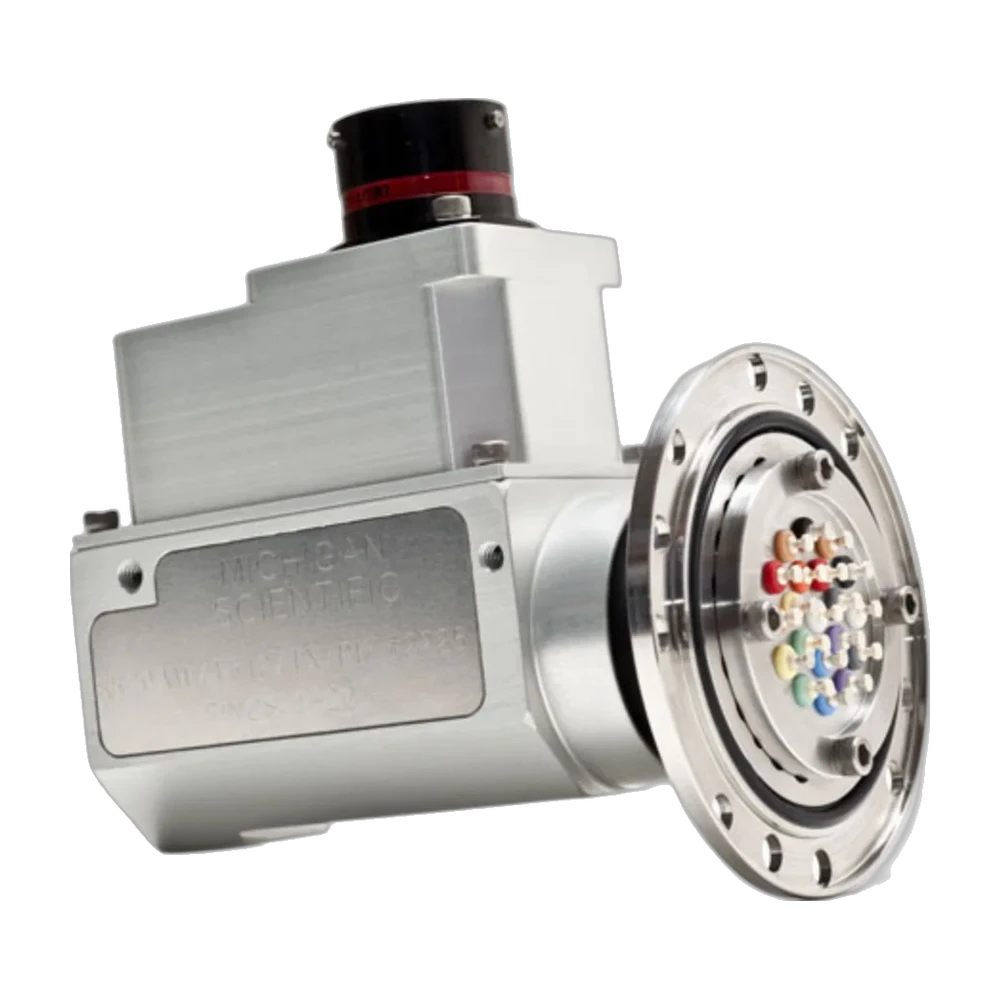
| SR/ERT Series Modular end-of-shaft slip rings: 10, 20 or 36 circuits, 50.8 or 63.5 mm rotor, open or weatherproof, with a built-in optical encoder of 256 to 512 ppr and tachometer or resolver outputs. | |||||||
| SR-A/ | — | 10 to 36 | 512 | 2 400 to 10 000 | 63.5 | — | Request a quote Configure Datasheet |
| SR-AW/ | — | 10 to 36 | 512 | 2 000 | 63.5 | Weatherproof | Request a quote Configure Datasheet |
| SR-M/ | — | 10 to 36 | 512 | 2 400 to 10 000 | 50.8 | — | Request a quote Configure Datasheet |
| SR-MW/ | — | 10 to 36 | 512 | 2 000 | 50.8 | Weatherproof | Request a quote Configure Datasheet |
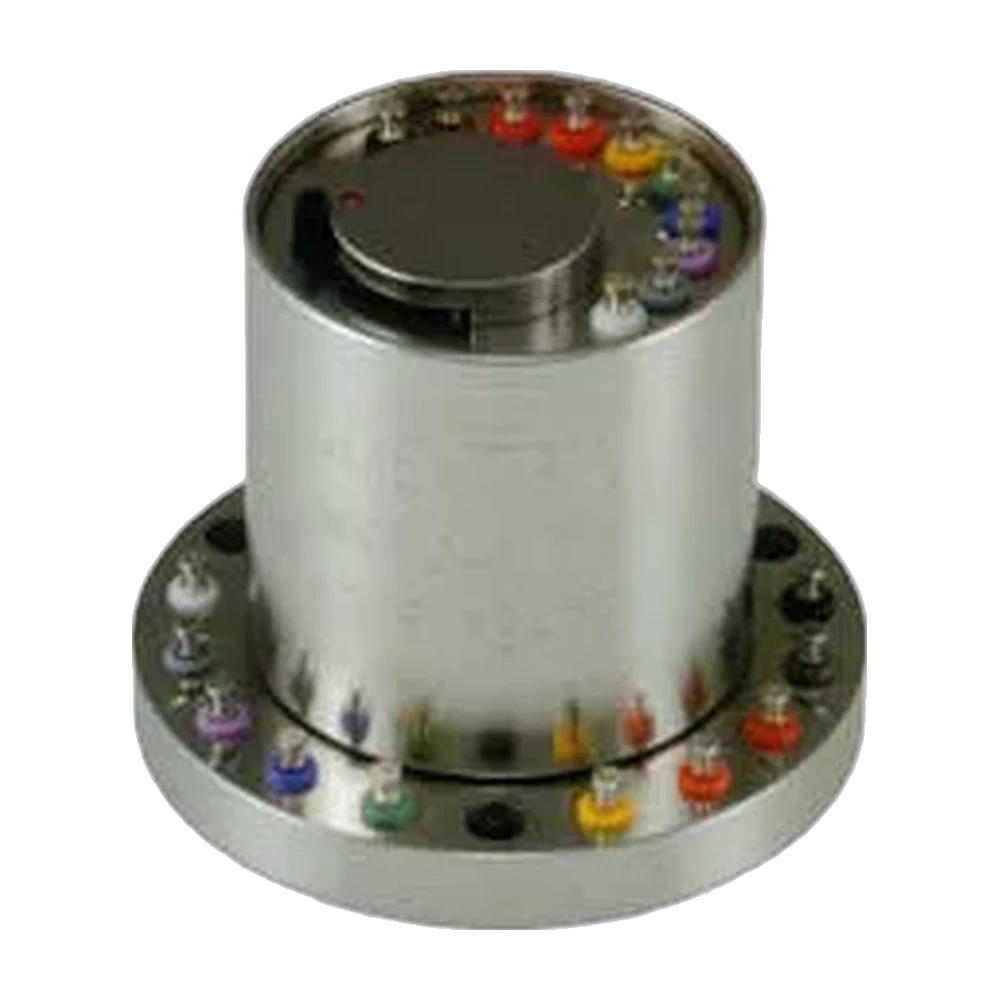
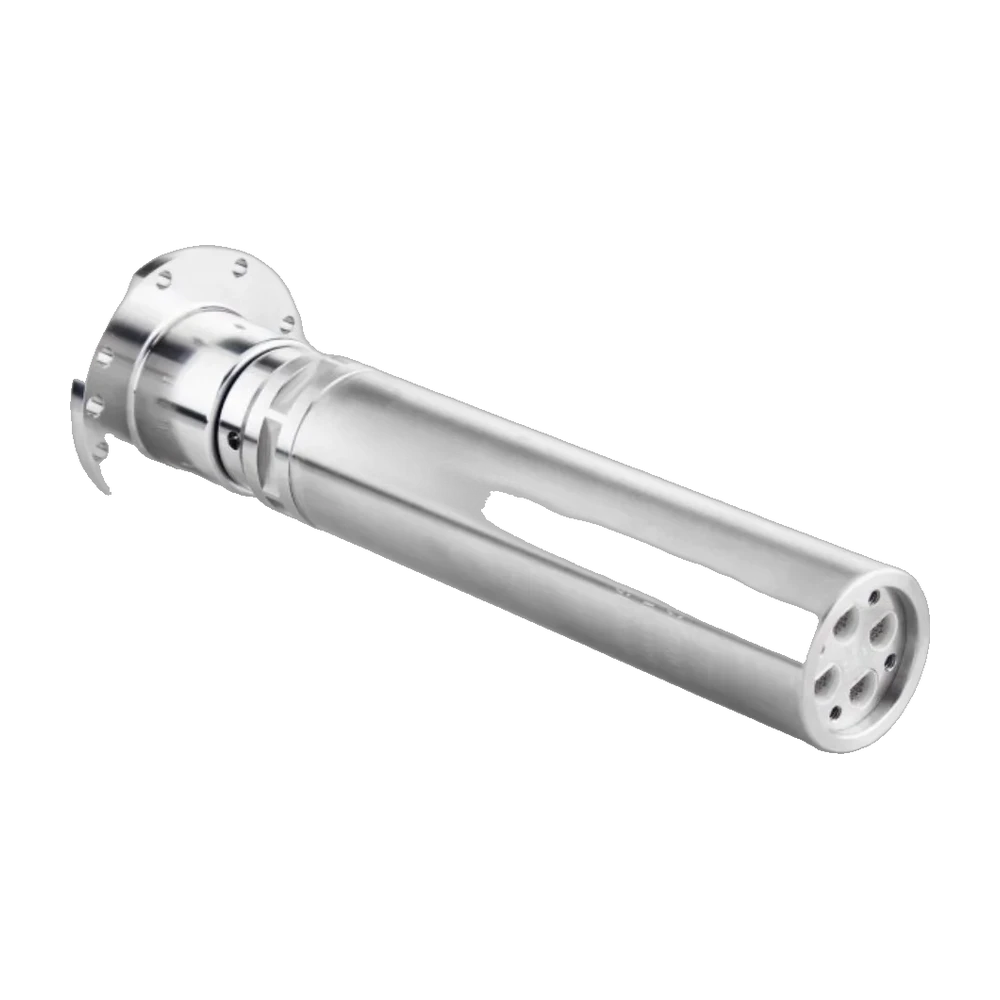
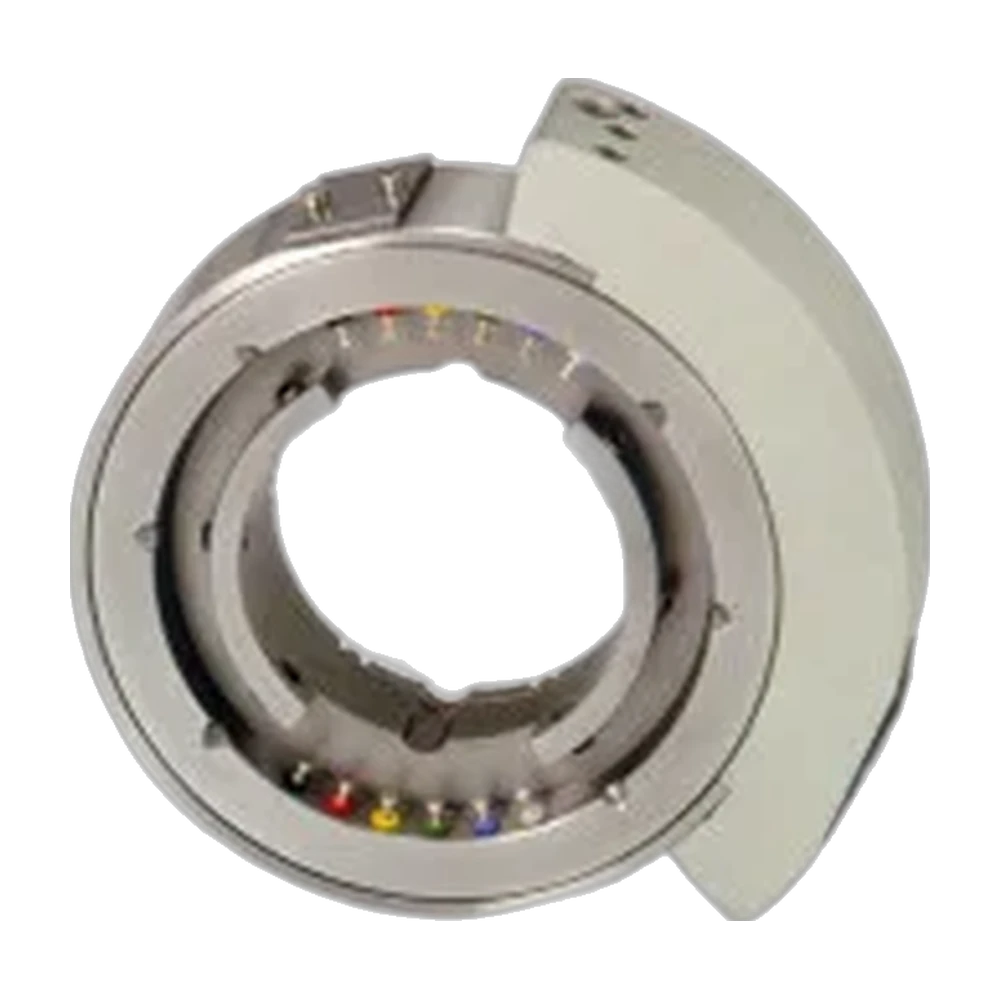
| B-Series Tubular slip rings that slide over a shaft with no free end: 4 to 8 circuits, bores from 30 to 81.3 mm, open or weatherproof. | |||||||
| B4-2, B6-2, B8-2 | — | 4 to 8 | 60 | 7 000 | — | — | Request a quote Configure Datasheet |
| B4-2W, B6-2W | 2 × strain gage | 4 to 6 | 60 | 7 000 | — | Weatherproof | Request a quote Configure Datasheet |
| B4-3.2, B6-3.2 | — | 4 to 6 | 60 | 4 500 | — | — | Request a quote Configure Datasheet |
| B6-3.2W | — | 6 | 60 | 4 000 to 4 500 | — | Weatherproof | Request a quote Configure Datasheet |
| B7-1.24W | — | 7 | 60 | 3 500 | — | Weatherproof | Request a quote Configure Datasheet |
| B7-T-1.2W | Strain gage (built in) | 7 | 60 | 3 500 | — | Weatherproof | Request a quote Configure Datasheet |
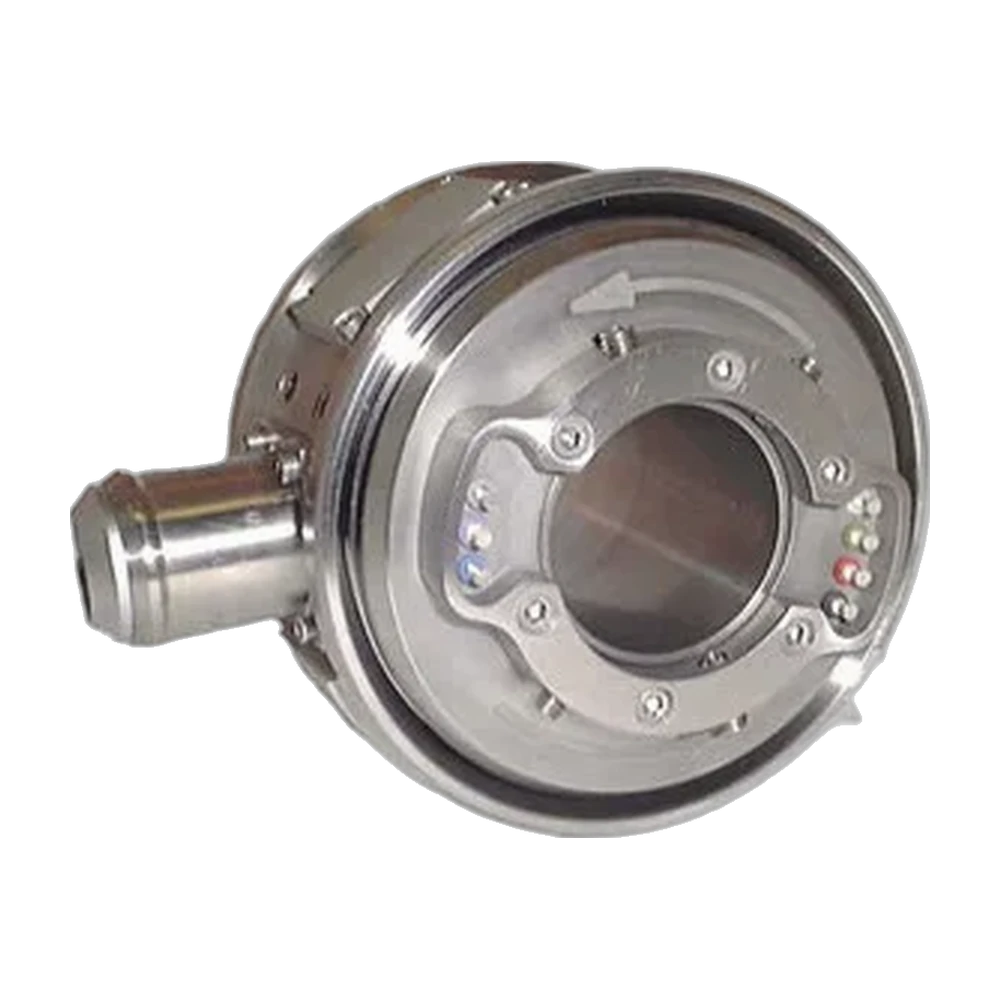
No catalogue model meets every criterion. Custom versions exist: ask us.
Shaft drawing available? Send it, an application engineer selects the ring. Send the drawing
Applications
-
 Efficiency Vehicle efficiency and power mapping Torque and speed measured at each driveline stage, from engine to wheel, so each power loss has a location.
-
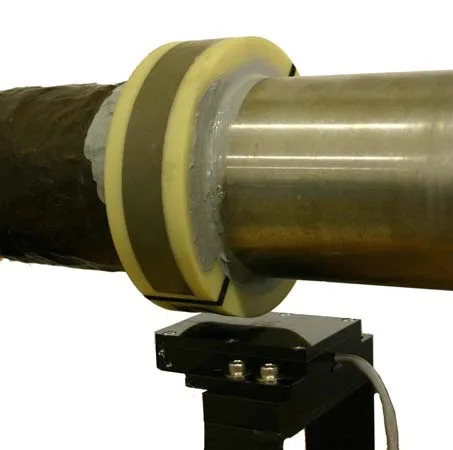 Turbines Wind turbine strain Strain on the blades and in the gearbox of a wind turbine, brought off the rotor by a slip ring or by telemetry.
-
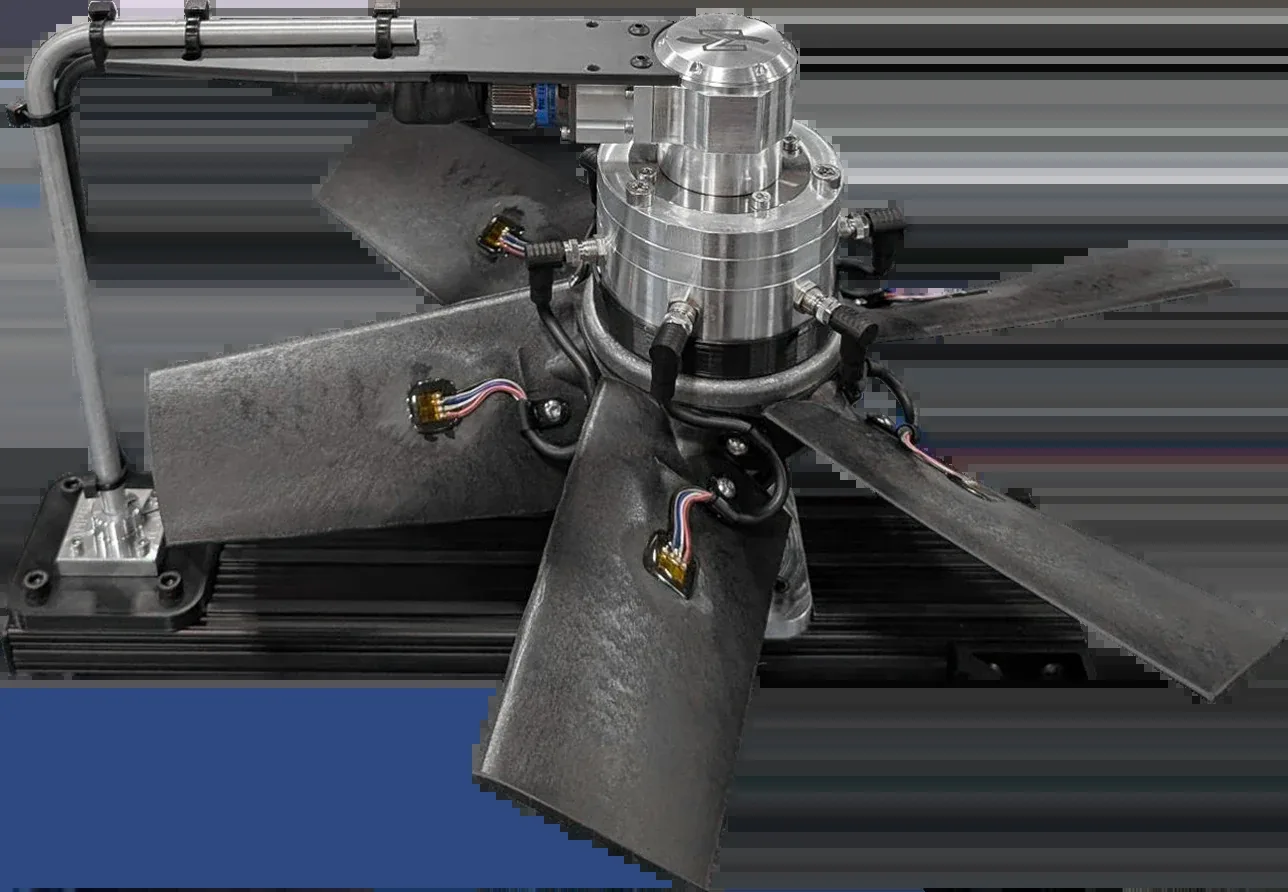 Turbines Fan and turbine blades Strain and temperature from many points on the blades, recorded together while the rotor turns.
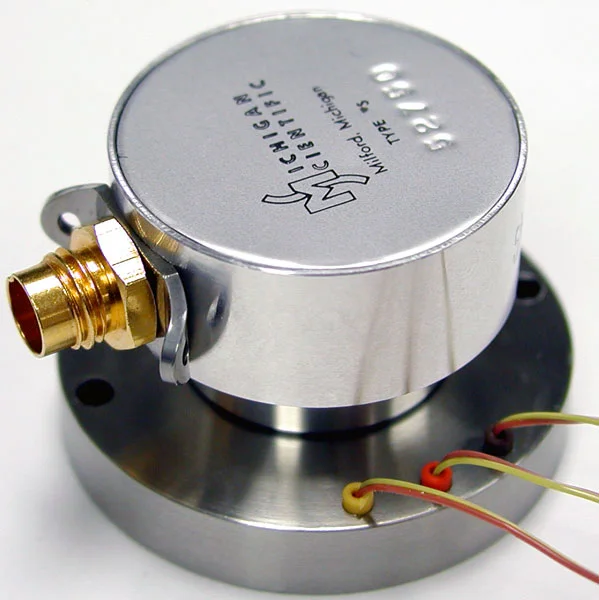
Guides, notes and manuals
Choose a slip ring, read its part number, wire the gages through it, install it.
- Guides
Choosing a slip ring
What a slip ring does, which kind fits your shaft, and when telemetry is the better route.
- Technical note
Part numbers and connectors
Nine positions describe an end-of-shaft slip ring, from the number of rings to the stator connector.
- Technical note
Strain gage circuits through a slip ring
Ring noise depends on where the bridge arms sit. Put all four on the spinning side.
Read the note - Manuals
Manuals and brochure
The slip ring range on paper, and the manuals of the two main series.
What engineers ask first
Which slip rings have an encoder?
End of shaft: the /E60 versions of the SR Series (60 ppr) and the SR/ERT Series (256 to 512 ppr). Tubular: the /E60 versions of the B-Series (60 ppr). The encoder gives wheel angle from the same assembly, which the wheel force electronics need to resolve loads into vehicle axes.
Can a slip ring run outdoors on a vehicle?
Yes, with a weatherproof version. End of shaft: the SR Series (W versions, with a rubber boot or a metal cap on the stator), the SR/ERT Series and the SR20/75/W offer one. Tubular: the W versions of the B-Series, from the B4-2W to the BA-T-1.2W. The S-Series, Short S-Series and SR45A/SR60A have no weatherproof option.
Slip ring or telemetry?
A slip ring has no bandwidth limit and carries up to 60 circuits, but an end-of-shaft model needs a free shaft end. When the shaft cannot be modified, a clamp-on telemetry transmitter is the other route.
Can you build a slip ring to our shaft?
Yes. Michigan Scientific builds custom slip rings to a bore, length and circuit count; send the shaft drawing and the signal list.
Which slip ring for your shaft?
Shaft end or bore diameter, speed, circuits, indoor or outdoor. An application engineer answers with a reference and a price.
More details to give? Use the full contact form.